
Sonic Fireworks
For a number of years I’ve been working with Sonic Fireworks & Events, so much so in fact that they’ve become good friends.

For a number of years I’ve been working with Sonic Fireworks & Events, so much so in fact that they’ve become good friends.

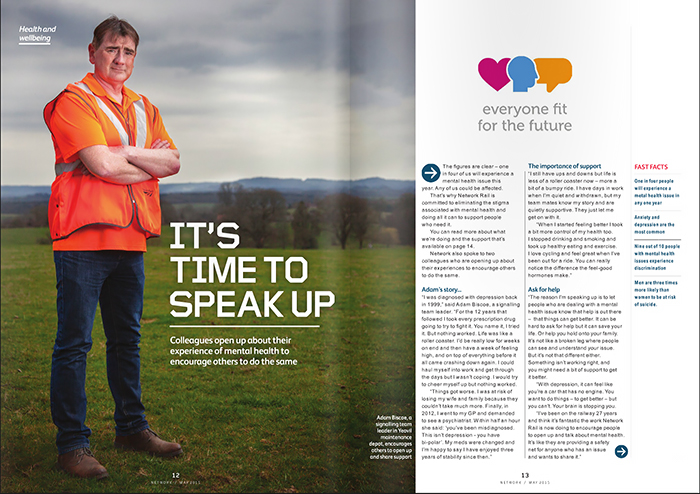
Editorial photography for a Network Rail story on mental health issues – depression etc. With a story such as this, it’s really important that the photography reflects the storyline. The first ideas were shot in bright sunshine and, to my mind, didn’t work. Thankfully, a while later on, the clouds appeared and the scene was set for an image that could be a little more pensive, reflective and complementary to the story.


The images were shot with a softbox and grid off camera right along with a neutral density filter to reduce the aperture value while balancing it below the maximum sync speed of the flash (i.e. to slightly underexpose the background while controlling the light on the subject). Despite the cloud the scene was quite bright and needed toning down to emphasise the subject and allow for text and headline overlay.
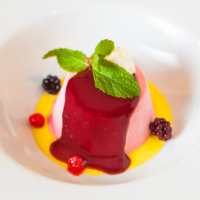

One of the keys to photographing food for restaurants is preparation. In both cases some food was prepared specifically for photographing while other dishes were on their way to the customer/s. This meant time, preparation and test shots had to be made well beforehand to ensure that the dishes to be eaten were shot quickly. As most photographers know, preparation in all areas is everything!
The other essential is taming the light. All shots here were shot with speedlights – no studio flash. On its own, flash is a very blunt instrument, so light modification is essential.
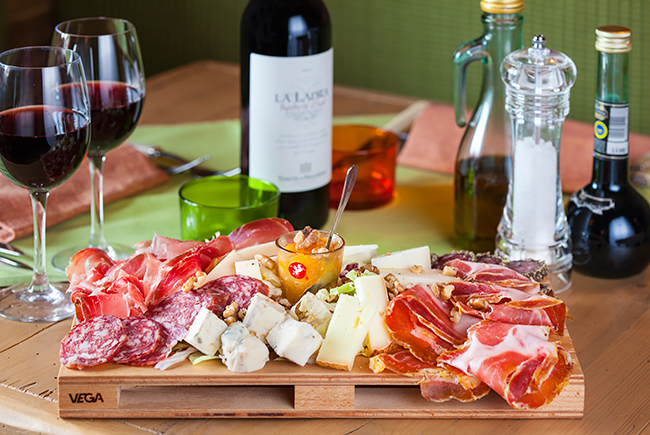
The two shots above were shot using daylight and flash. Using a softbox, reflectors and added diffusion the light balance and quality of light was achieved, giving a naturalistic impression. The two below, where there was no natural daylight, took quite a long time to achieve. Ultimately, using reflectors, two strobe units, diffusers and softboxes, the intended light quality was reached – balanced but subtle – again giving an impression of natural diffused light.
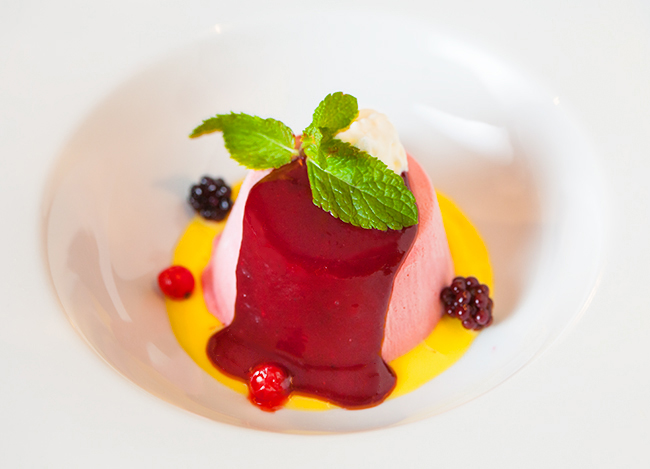
Food photography for restaurants is a specialised discipline and one where experience at commercial still life photography comes in very useful. For more information on photographing food for your restaurant get in touch using the contact form. Shoots are undertaken in the Devon, the South west of England and throughout the UK and abroad. These images were shot for two restaurants in Italy.


A change from commercial photography with a wedding and party that came with some beautiful November weather in Arizona. These are images from pre and post wedding shoots.
This opportunity also gave me the chance to try out some new kit – namely the Phottix Odin Speedlight Trigger System combined with a Westcott Apollo Softbox. These make for a portable, flexible and adaptable on-the-run lighting set-up. With the addition of a “sun swatter” or reflector with translucent scrim, light can be tamed. But it’s worth pointing out that in summer higher power strobes will more than likely be needed as speedlights have limited power output.

Phoenix at most times of year has an intense sun that needs controlling for portraits. Noon on a November day was no different. With the aid of a translucent sun blocker/reflector, this lighting combination worked well. It’s worth noting that, for these social images (below), a flatter light was the intention to complement skin and facial tones.

The Westcott Apollo is a clever design with a lot of thought going into how it works. No forward-facing flash here, instead it shoots back into the box for added light diffusion. It’s also quick and easy to set-up and seems pretty hard wearing. The Phottix Odin is what makes remote strobe/s practical; shooting in TTL mode or manual (my preferred route) you can control the output from each flash individually from the camera, adjust flash ratio/s and more. It also has high speed sync offering shutter speeds up to 1/8000 sec.
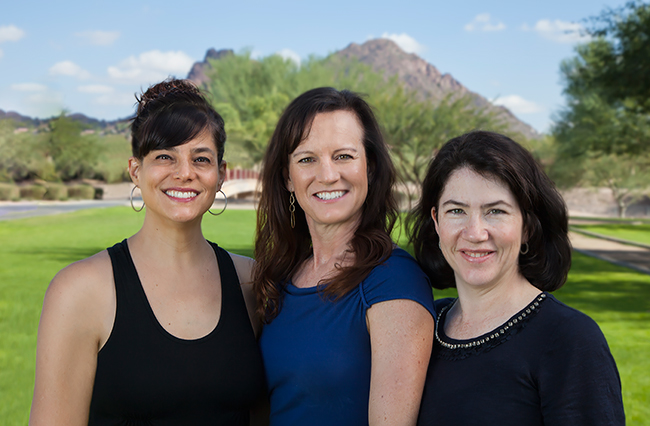
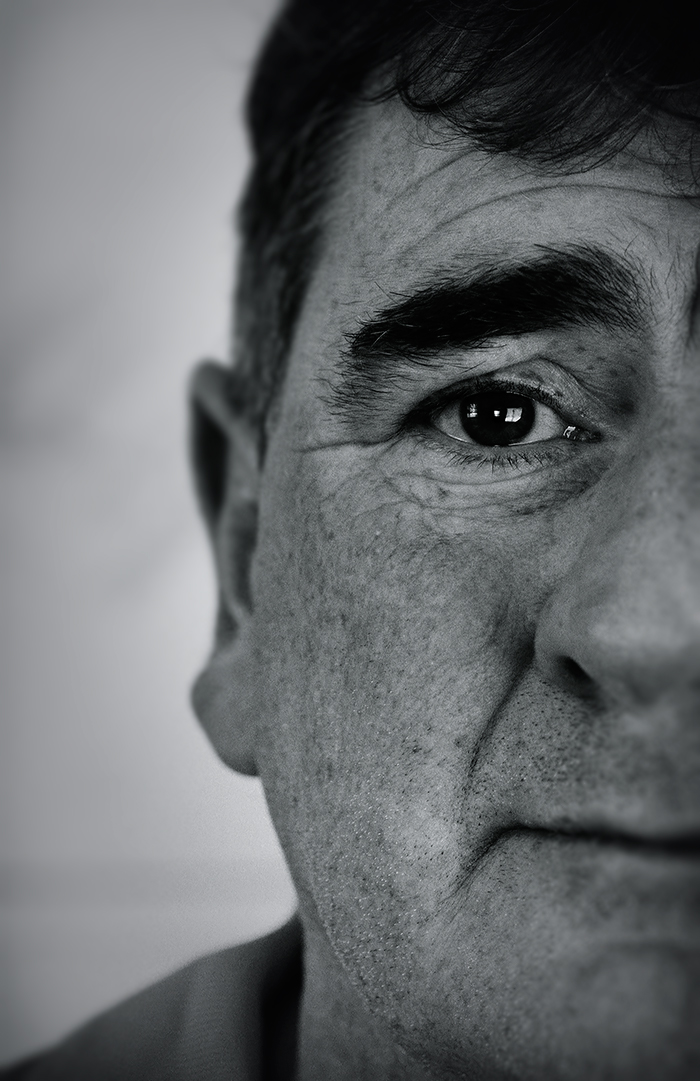
These images were taken with the Fuji X-T1 and Canon 5D mark II. It is with portrait photography that the X-T1 excels, especially in controlled light situations. The lack of an anti-aliasing filter certainly helps give crisper images while conversion to black and white often seems to complement the tones of a Fuji image. Monochrome conversion was done from Fuji raw – known as raf in Fuji circles – using Photoshop with Fuji black and white styles in addition to some in Nik Silver Efex.

Of course, often the best party pictures are spur-of-the-moment images captured using natural light only…


– Great lightweight camera.
– Out of camera jpegs superb on the whole.
– Really fun to use.
– Poor battery life.
– Superb viewfinder.
– Needs a bit more work though.
With Canon seemingly increasing the price of their cameras exponentially – the 5DIII costing 50% more-or-less more than the 5DII and the G1XII costing £200 more than the G1X, it is now time to look at some of the other offerings on the table – particularly a lightweight camera for walk around stock image gathering.
Canon and the 5D series in particular will remain my main camera for imaging – they offer a variety of professional features and superb image quality that I rely on. However, Panasonic and Sony have broken through what appears to a Canon/Nikon video complacency in recent years with two amazing cameras (GH4/A7s) offering 4K, high bit-rates and, in the case of Sony, amazing low light performance. In the stills arena, Fuji is taking on the giants with its professional camera X series including the latest X-T1 which offers professional performance in a lightweight, mirrorless, camera. The X-T1 isn’t cheap but it is highly rated.
A number of reviews of this camera have shown only monochrome images which seems to miss the point of having Fuji’s film emulation. So all images are colour.
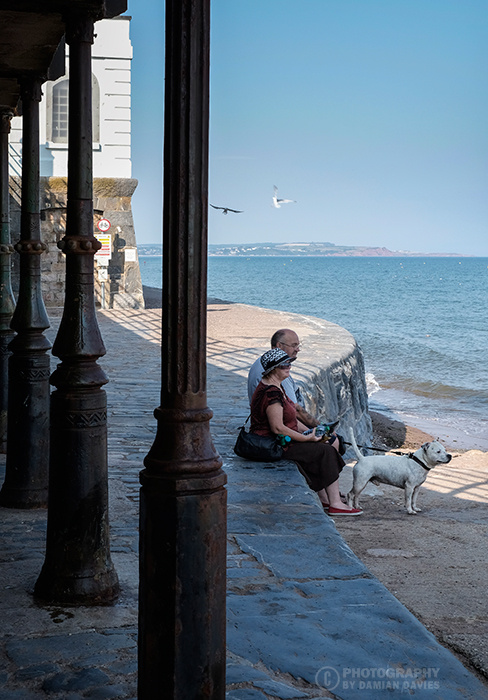
The introduction to market of these new cameras doesn’t diminish the quality of previous cameras and the 5DII especially produces great image quality. But the search here is on for a lightweight walk around camera. Partly a back-up camera and partly one that can be used for editorial stock and more.
Perhaps now would be a good time to preface this with the admission that I tried out the Fuji X100 and hated it. Well, hated all of it except the leaf shutter. More on that later. But technology develops and you cannot judge a company by just one camera. And with that over and done with – onwards…


I’ll admit to being a big fan of Zack Arias. He produces some great images and loves this camera. So I thought it was worth a look. Now, all technical details can be found elsewhere. This is a real world trial (more than a test). Can it produce what I need?

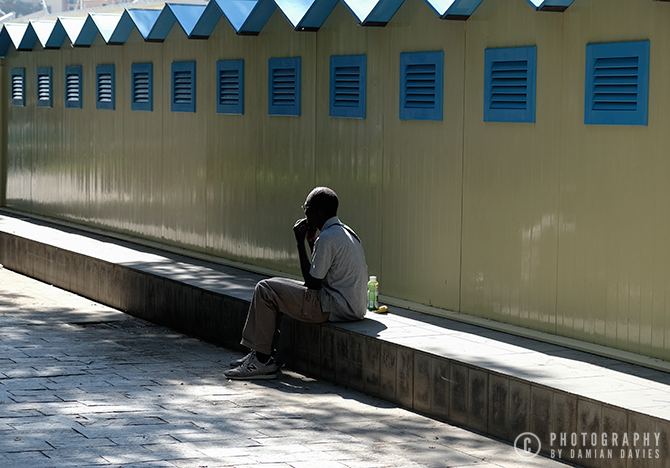
There are several things that don’t seem quite right at the moment.
I hesitated before adding this. This is a really nice camera to use but there’s one increasingly annoying issue…the “watercolour” effect. Now this is a big issue. It only seems to happen on certain objects/scenes and occasionally.

1. The exposure compensation dial which I knocked on several occasions needs a lock!
2. I personally didn’t find the d-pad to be too bad – though others have complained about it.
3. The battery door could do with some kind of auto locking mechanism
4. The flash PC sync socket cover on the front of the camera needs to be fixed to the camera somehow to stop it being lost. Yes, mine’s gone already!
5. Better battery. Battery life is poor.
6. A built-in neutral density filter would be a real bonus.
7. It’s a shame Fuji didn’t manage to equip the X-T1 with the leaf shutter the X100 had. A leaf shutter is the holy grail as far as working with flash in strong sunlight is concerned. Now that would be worth an extra hundred in anyone’s money.
8. XF10-24mmF4 R OIS. The kit lens (XF18-55mmF2.8-4 R LM OIS) is so much more than a kit lens – it’s part of Fuji’s professional line-up of lenses and feels like it. All the same 18mm on this sensor equates to about 27mm on a full frame camera and for me is not quite wide enough at times. The 10-24mm = 15-36mm in full frame terms and is most definitely on the wish list.
9. Larger sensor. Yes, size does matter!

What can I do to make light of this dull, dull day? One of the most trying times, when using a camera and attempting to produce some professional and publishable results, is when the weather is playing down and dirty while you are shooting using only natural light. A baptism of fire then for the Fuji X-T1 on the day it was bought (and without reading the manual in any great depth). The location was Paignton and the rains began and never really stopped. How would the camera fare in these conditions?
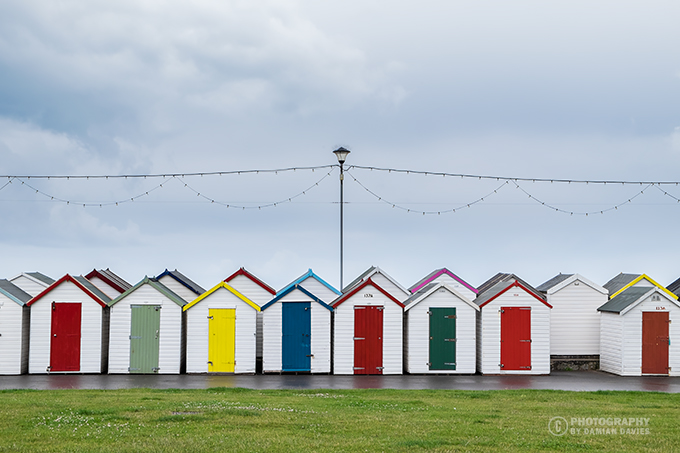
The conditions the image above was taken in is always a good test to see if the camera is able to lift the images in totally flat light with dark clouds and heavy rain. The ISO (or ASA) was pumped up to 400 and, while evaluating the XF18-55mm F2.8-4 R LM OIS lens, an aperture of f11 was chosen to find the “sweet spot” for images. A little pincushion distortion at 24.3mm (see left hand side of image) but nothing too bad. The image was processed from raw (or raf in Fuji’s terms) with exposure and highlights altered a little (+0.95/-78), shadow and whites up to +9 and +12 for clarity and +18 for vibrance. No saturation increase.
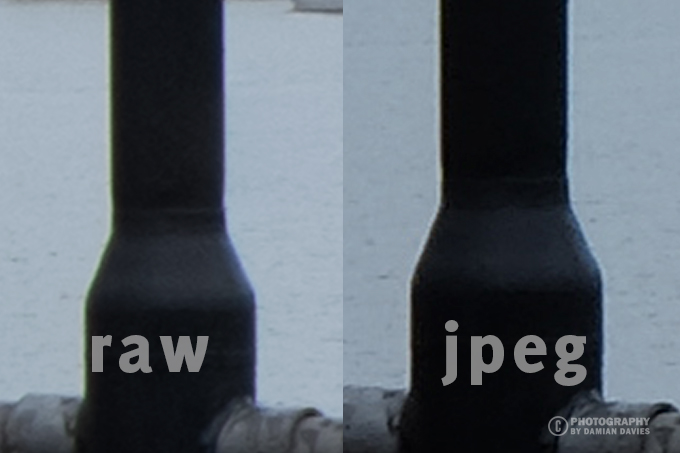
The out of camera jpgs are great. The internal processing of the image file is very good. So what about raw/raf? These need a little work in Photoshop to compensate for chromatic aberration etc. From raw/raf you have the option to apply a Fuju film picture style or leave the image as is and process as Adobe 98 or sRGB image.
It’s a superb camera. There are a few niggles, some minor some not so minor, but on the whole it’s a joy to use. There are times I wished I’d used my full frame camera for a shot and then realised that I would only have been carrying a small, lightweight camera around, not the larger beast.
Photographers searching for one camera that fits all briefs will be disappointed. Is there ever one camera that can offer everything? I think not. I do think that it is the start of a great camera and at this stage it’s doing very well. But I want it to do better! And I hope Fuji are taking on-board these comments, from me and others, to make the necessary improvements and wish lists.
As it is, yes I’m pleased to have it because there are a whole lot of shots I would not have got without it. This camera excels at images of people with excellent skin tones. However Fuji, focus tracking and the “watercolour” effect need to be addressed.


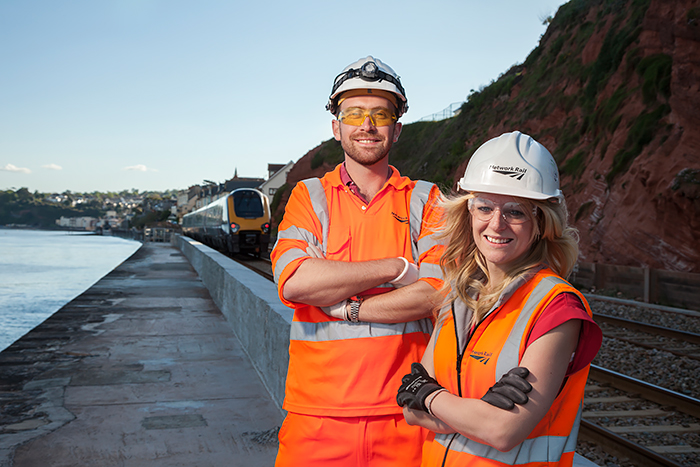
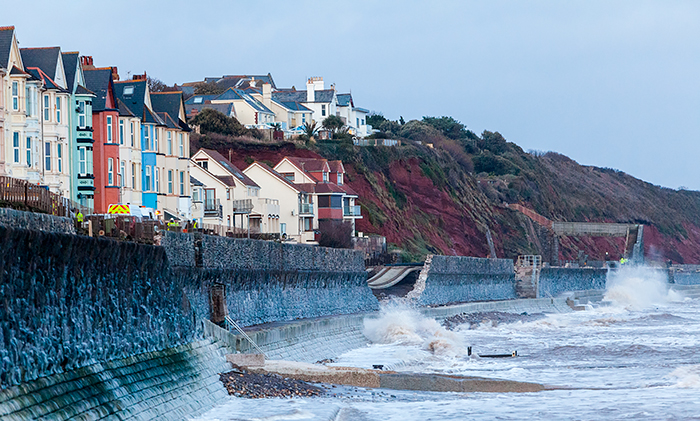
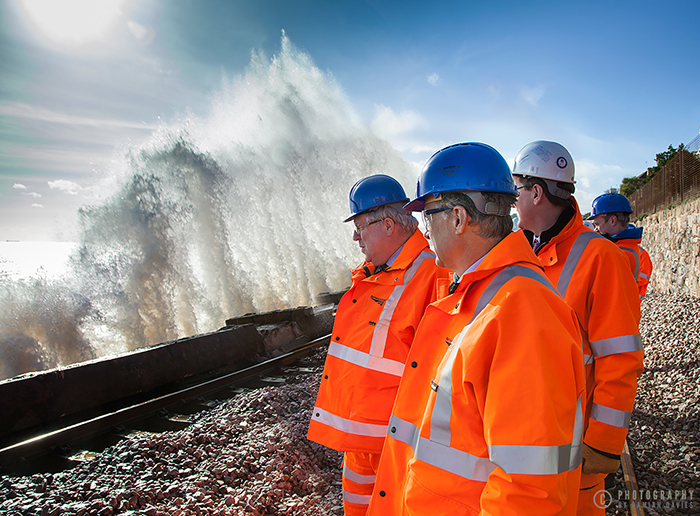
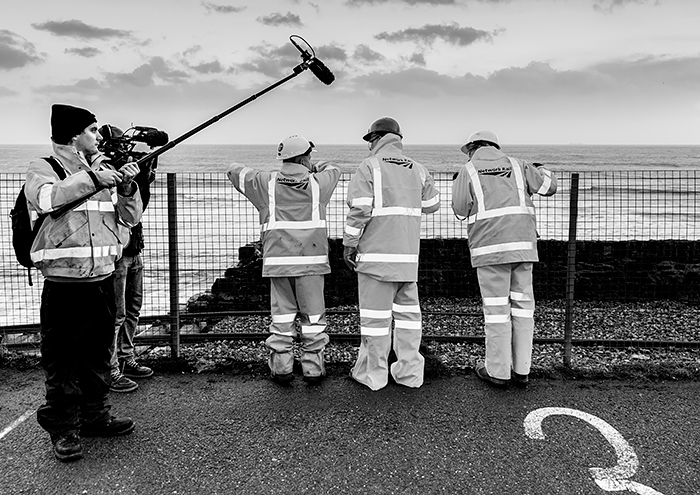
Environmental portraiture for a Network Rail story on their specialised workers and teams that have helped rebuild Dawlish. Portraits follow with the printed article shown below.



Shot over five days in late April 2014 in the Italian alpine resort of Sauze d’Oulx as part of Pharrell Williams partnership with the United Nations International Day of Happiness 2014.
The video production involved over 100 people co-ordinated by co-producer, Jill Couzens, along with hotels, passes, venues and much more. My main tasks were directing, cinematography, editing and other post-production.
The weather changed pretty much every day during the shoot – from summer-like sunshine to heavy snow (by way of rain, of course!) creating its own problems that had to be overcome.
Of course, the main focus of the video is the people and they were unfailingly brilliant, helpful and ever-ready to make the video what it is.
Now we’ll be looking forward to International Day of Happiness 2015!
Technical
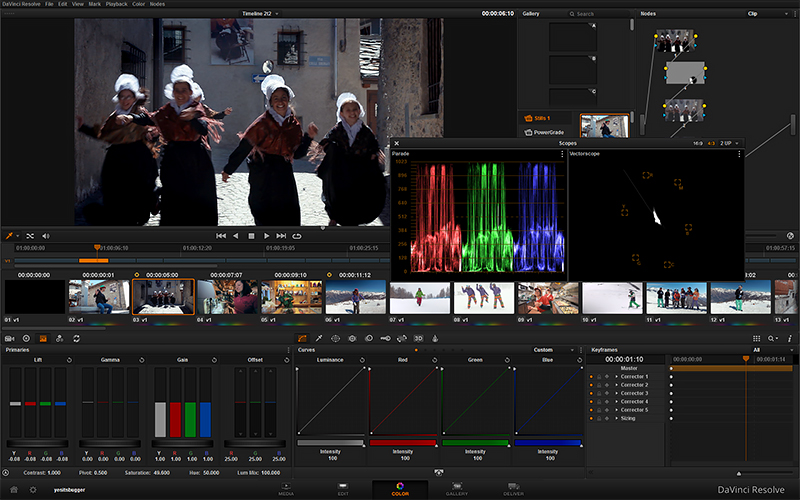
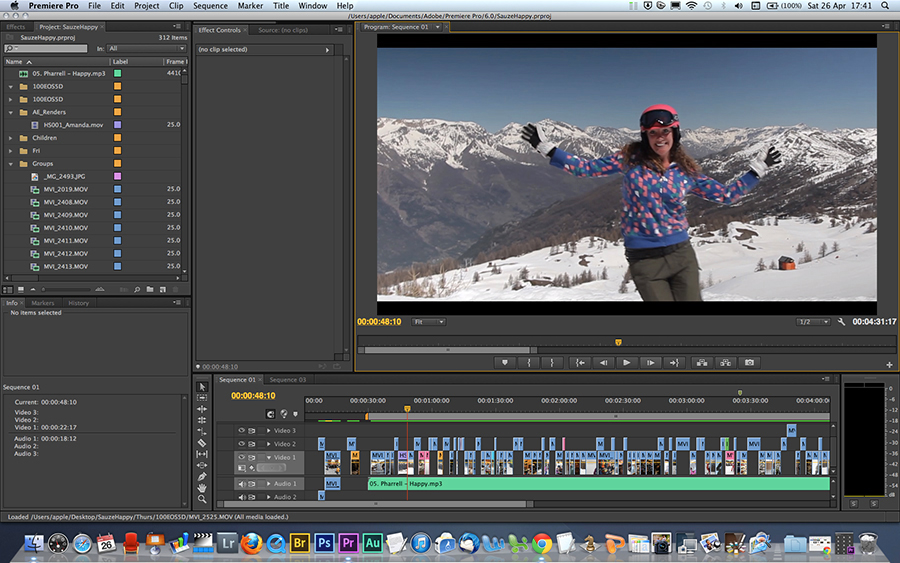
The video was shot using Visioncolor presets and edited in Premiere Pro CC and After Effects CC. Colour grading was done in Davinci Resolve using Visioncolor Osiris LUTs.
Further Information
Pharrell Williams website celebrating the ground-breaking video 24 hours of Happy can be found here.
More information about the United Nations International Day of Happiness can be found here and here
To get in touch about your video production needs in Devon, Cornwall, Somerset and Italy or wherever – whether for tourism, business or charity, get in touch here for a chat.
Some images from the video can be seen here




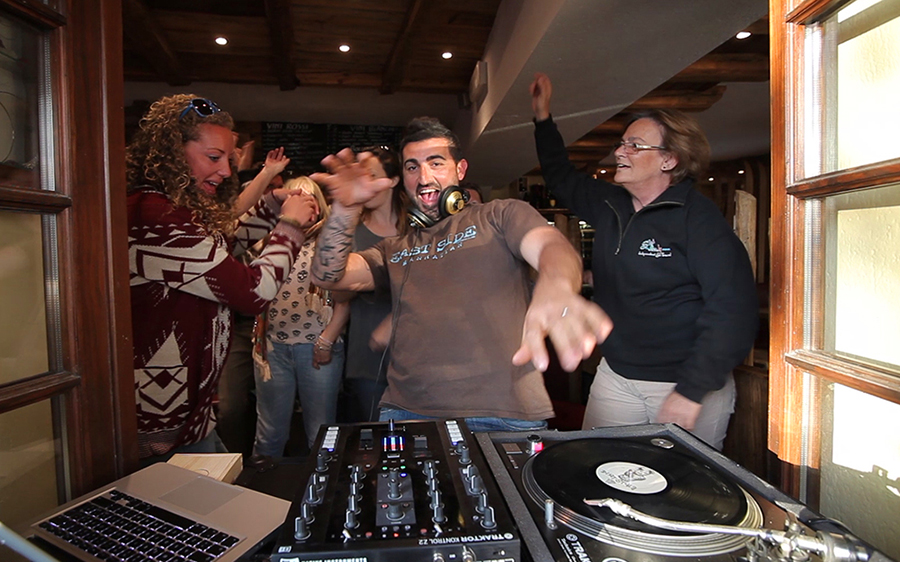
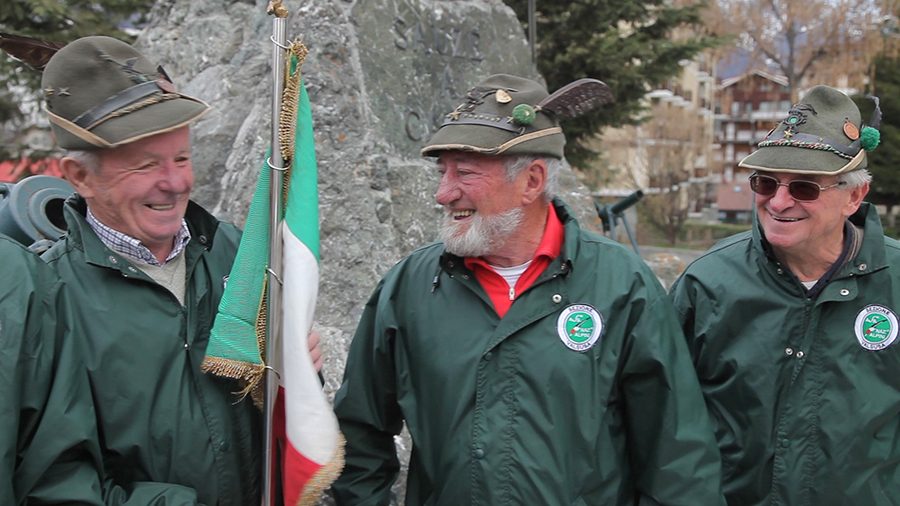
There’s been an outbreak of alpine happiness in the Italian ski resort of Sauze d’Oulx as we’ve been shooting the resort’s Happy video to help promote it in social media along with, of course, supporting the UN International Day of Happiness.
The video production team has included producer, Jill Couzens, who has been an absolute star in arranging, co-ordinating and managing which makes my job, dealing with the creative along with the technicalities in shooting the video, much easier.
Every kind of weather made an appearance – from bitterly cold blizzard conditions to bright sunshine by way of a little rain at lower levels. Being the winter season’s end was very useful in ensuring the “real” people working in the resort were available to take part – and take part they did with enthusiasm, energy and ideas.
More details soon – in the meantime here are a few screen shots to give a sample of La Vita Felice.




A selection of images from previous photography commissions undertaken in Italy.
Commissioned photographic work, both editorial and commercial photography and video, is undertaken in Italy from the high Alps to Sicily (or Piemonte to Puglia), in addition to commercial photography in Devon, the South West of England and UK generally.
The images above are a small selection of (travel specific) images for tour operators and other clients along with general stock photography.
And now the test. Going in rows, from left to right, where are all these locations in bell’Italia?
Answers
1. Sorrento Coast
2. Sorrento Coast
3. Bressanone
4. Bressanone
5. Padula
6. Tuscany
7. Florence
8. Assisi
9. Bologna
10. Cremona (but could have been anywhere!)
11 Assisi
12. Assisi
13. Bologna
14. Turin
15. Isola Bella
16. Assisi
17. Assisi
18. Maratea
19. Orvieto
20. Bologna
21. Florence
22. Isola Bella
23. Lucca
24. Perugia
25. Tuscany
26. Orvieto
27. Tuscany near Pienza
28. Tuscany near Pienza
29. Bologna
30. Turin
31. Siracusa
32. Bologna
33. Bologna
34. Monreale
35. Turin
36. Ravenna
37. Ravenna
38. Somewhere in Umbria
39. Bologna
40. Bologna
41. Parma
42. Tuscany
43. Lucca
44. Valley of the Temples, Agrigento
45. San Gimignano
46. Lake Orta
47. Lake Orta
48. Lucca
49. Police in Umbria
50. Lucca
51. Valley of the Temples, Agrigento
52. San Gimignano
53. Pastoral Umbrian scene
54. Pastoral Umbrian scene
55. Lucca
56. Milan – fashion district