Cassini’s Voyage

NASA images from the edge of the solar system

PIA07772

While busy with commercial work – a separate post to come soon – I thought it of note to post this incredible image. Taken by the Cassini space probe (which happens to be near* Saturn) of Saturn’s rings and the Earth in the distance (annotated).

What makes this incredible is twofold: first and foremost, the technology involved in doing this and, second, it is only the third time an actual image of the Earth has been photographed from the outer solar system showing, amongst other things, how small and insignificant the Earth looks from a mere 900 million miles away.

NASA has also published raw images – devoid of filtration etc – and these themselves are, to my mind, works of art.

* 581,000 miles (936,011 kilometers) or so away from Saturn.

Image Credits: NASA/JPL-Caltech/Space Science Institute

Budleigh Spring

You either love it or you hate it. 6×6 (square) photographs force you to look at the shapes, the graphic lines created and how they interact with the frame. The symmetry (or asymmetry) and composition are vital aspects of this

Exmouth Winter

Exmouth Winter Days video

An experimental video motivated by being drawn to a seaside resort in off-season. What storyline? Initially it was shoot and see what happens. A creative exercise. As time drew on, I realised the weather (variable to say the least) was the narrative – the rain driving me away from the town but leaving with memories of better days – which pretty much summed-up the filming of this piece. The draw was the idea of seaside resorts with fading splendour deserted in the winter but, as I discovered, there wasn’t much in the way of faded splendour – more an active out-of-season resort with always something going on and, more often than not, a sandy paradise for dogs and their owners.

ewd

TECHNICAL

One of the greatest issues to counter and overcome was, unsurprisingly perhaps, the awful weather or more accurately, the constant battering wind. A 1.4X converter was used on the 200mm f2.8 lens for most shots to give cinematic throw to the image and reduced depth of field. However, even the slightest wind-induced camera shake rendered the footage unusable (except for one or two clips After Effects managed to stabilise sufficiently). And there was a lot of wind. Did I mention the wind? The film was edited in Premiere Pro and graded in PP and Magic Bullet Looks. Magic Lantern was used during the recording achieving an average bit rate of 50mbps which definitely helped during the grading.

View video on Vimeo here

Local Politicians

Press portraits of local politicians and activists

Z9W2496 (1)

Liberal Democrat Councillor Nick Way

Z9W48833 (1)

Judi Binks, community and Liberal Democrat activist

Z9W28595

Bob Edwards, local UKIP candidate

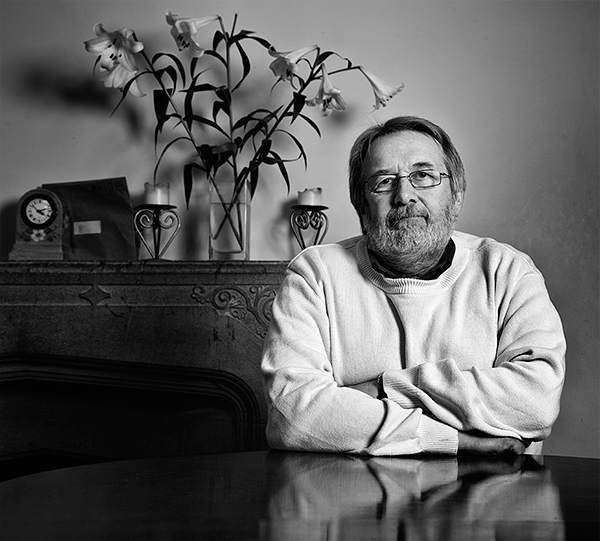
Part of a local community project involving councillors and activists in Crediton, Devon. While all images were originally in colour, they were photographed with the intention of producing a final monochrome image. The intention being to focus solely on the people involved, reducing any colour distractions from the images while, in a small way, paying homage some of the great chiaroscuro monochrome newsprint images.

Monitor calibration varies considerably so, to view these images at their best, check that you can see the graduations from light to dark here:

Untitled-2

Exeter University

exeter university new forum extension image, Exeter, Devon
exeter university new forum extension image2, Exeter, Devon
exeter university new forum extension image 3, Exeter, Devon
exeter university new forum extension image 4, Exeter, Devon

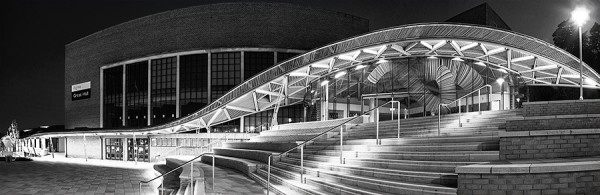
These images, shot for Exeter University, show the exterior of the University’s Forum – a new £48 million centrepiece at the heart of the Streatham Campus. The flowing, arching design by Wilkinson Eyre Architects.

Tour of Britain

tour of britain cycling race in mid devon

Congratulations to JTL, Jonathan Tiernan-Locke (above far right in his 2011 Rapha Condor Sharp colours), for his success in the Tour of Britain 2012, the first British rider to win in 19 years.

Tourmalet

Climbing the Col du Tourmalet and other insane ideas
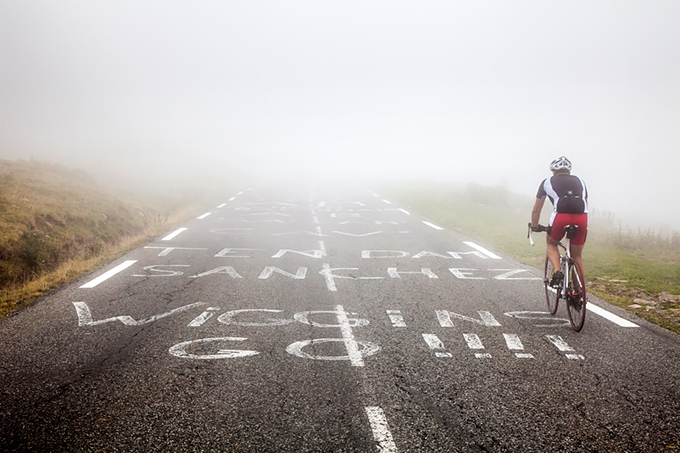
LWM1208TOUR304

Wiggins Go! Tour de France encouragement for Bradley Wiggins
on the Col du Tourmalet while cloud and fog covers the ascent ahead

The chance to follow in the tracks of the cycling greats including this year’s Tour de France winner Bradley Wiggins is not one many cyclists would turn down. The opportunity to tackle the Col du Tourmalet in the Pyrenees and photograph at the same time – who would refuse? Let’s just say it seemed a great idea at the time…

LWM1208TOUR350

Cyclist tackling the switchbacks on the Tourmalet

Hors catégorie (HC) is a term used in cycle races most notably the Tour de France to designate a climb that is “beyond categorisation” i.e. an incredibly tough climb. Most climbs in cycling are designated from Category 1 (hardest) to Category 4 (easiest), based on both steepness and length. A climb that is harder than Category 1 is designated as hors catégorie…and that includes the Tourmalet.

The climb from Luz Saint Sauveur is 18km – the gradient averaging 8%. Just when your energy is almost totally sapped, your legs dead and the air thin from the altitude, the Tourmalet winds it up – the last few hundred meters being the steepest.

LWM1208TOUR329

The long road up the Col du Tourmalet

The forecast was for a sunny 25 degrees Celsius day. The reality was somewhat different, nice and cool for the ascent but fog hanging over the upper stretches of the climb brought the temperature down to single digits. What I didn’t plan for was that the sheer effort of the climb pretty much precluded photography; every ounce of energy and concentration going into making it to the top.

LWM1208TOUR295

Regular climb signposts thoughtfully keep you informed of the
distance left, the altitude and average incline percentage

Having taken-up cycling only 10 months before, an HC Tour ascent may have been slightly optimistic. Despite that I summited, enjoyed lunch at the restaurant/bar at the top, descending slowly in the freezing fog while stopping frequently to warm-up and photograph cyclists still to make it to the top. The whole experience was amazing and, hopefully, will be done again. Next time it would be great to be able to see the view from the summit! A little payback for all that hard work.
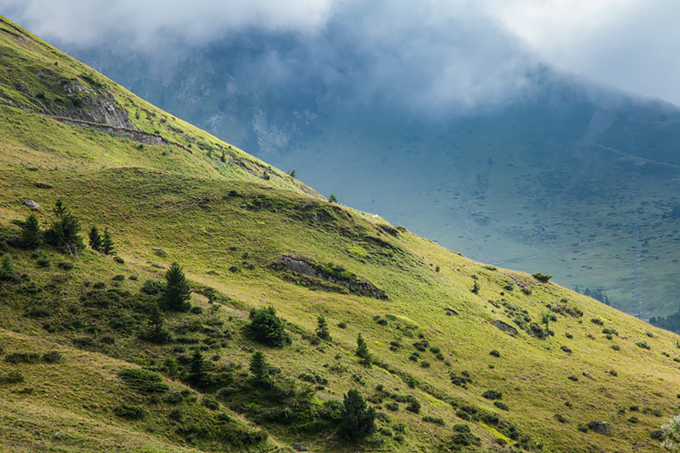
LWM1208TOUR339

Views from the Tourmalet ascent
fog and low cloud covering the upper stages of the climb

There was a real sense that some of the cyclists do the climb regularly. One, speaking a dialect of French I didn’t understand, insisted we form a peloton with him as lead while he, talking away, presumably instructed me about cadence and gearing for mountain climbing. Great camaraderie but he was far fitter and, sadly, soon zipped off into the fog banks above.

It’s said you only need one gear for the ride – a low one. To do the ride in what might be termed a “reasonable” time, you also need to be exceptionally fit and experienced. On reaching the summit I was astounded to see touring cyclists, laden with heavy panniers, that had also reached the top (how?) and two men enjoying a summit cigarette who were doing a week of Col climbing in the area. Perhaps the greatest motivation for me comes from the two, small-framed, 60+ year old Italians enjoying some sustenance in the restaurant at the top. After about half an hour two women in cycling gear joined them. They had perfect tans, were dripping with jewellery, hardly a hair out of place and had just done the same climb except from the other side. Tourmalet 2, the fitter sequel, beckons.This time I’d like to do it without having done 80 miles on a fully-laden touring bike the day before!

PhotoEthics

Musings on the Ethical implications of image manipulation and more

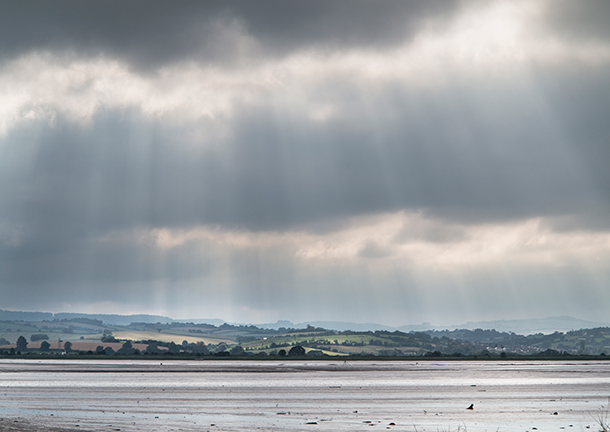
Streams of sunlight breaking through the cloud over the Exe estuary, Devon.

1. Streams of sunlight breaking through the cloud over the Exe estuary, Devon.
Monochrome image conversion using Silver Efex

Since photography began, images have been manipulated to show what the photographer or client intended whether that be by choice of film and lighting, by negative (or positive) processing technique, or colouring, burning and dodging prints amongst others. In photojournalism, image manipulation is a no-no, the clue being in the word stem journalism defined by the Oxford English Dictionary as “the practice of communicating news by photographs”. If the image is manipulated so is the message (the news) it is conveying and with that the bias, effectively news becomes propaganda ( information, especially of a biased or misleading nature, used to promote a political cause or point of view – OED). There is a school of thought that says no image can be totally objective which is of course true. Interpretation (of a story or event) is an integral part of journalism. The journalist interprets what the event they see, read and hear and this interpretation can lead to bias. This is no different with photography and photojournalism:

Questions of interpretation 1.

Where do you shoot from? Police lines or protester lines? Embedded or free agent in a war zone? How does the perspective from which you shoot alter the image you are shooting in terms of objectivity? What do you include, what do you leave out? How much of the story do you cover?

Questions of interpretation 2.

How do you interpret the image afterwards when processing it? While burning and dodging helps to focus the eye and create a visually pleasing image, including or excluding elements that are there in the original captured frame is generally thought of to be unethical in photojournalism (see National Geographic moves pyramids for cover shot, Reuters Apologizes Over Altered Lebanon War Photos etc etc.) The Washington Post came under attack for using HDR (High Dynamic Range) images to illustrate a story of a plane that crashed into a bridge 30 or so years ago. HDR images are very much in fashion at present. They are captured from several frames that are then blended (usually). This means there is no one decisive moment. The image is mixture of images. Should newspapers be using images that are creative amalgamations or does their use diminish the paper in the eyes of those who believe all papers should use accurate images that reflect the ethics of photojournalism? The argument here is one of artistic interpretation (of an event) rather than a singular image of the event with no alteration to any of the key aspects of the image.

So what of other areas of photography?

river exe estuary near topsham, devon

2. Processed as an RGB image in Photoshop

Well, In other areas of photography there seem to be few ethical considerations as far as image manipulation is concerned (but other forms of photography do have some ethical guidelines as far as shooting and portraying the image are concerned). And so we move onto stock photography. This image is of the River Exe estuary late in the afternoon. It was shot for stock, that is for commercial or editorial stock. Here the division regarding art and journalism becomes pronounced. The top, monochrome, image (1) is great as an art photograph but not as editorial stock. I would argue that the the heavy manipulation forces it out of the editorial arena by nature of that (overt) manipulation. Editorial images are generally illustrative and while I have no doubts this could illustrate something, that is not its natural home. This is not photojournalism and the over-riding consideration is aesthetics or saleability, not ethics. Had it been more subtle then it way well be fine after all; the image is “reality” in that nothing has been added bar image conversion additions (ones that could well have been done with traditional wet processing chemistry). The image above (2) has had an increase in clarity, saturation and contrast along with selective burning and dodging (as can be seen in the RAW image 3. below). In a similar way to the physical film negative, the RAW file is, effectively, a template from which to make the final image. Both allow for adjustments to create a final product.

exe estuary near exeter, devon

3. This is the RAW image converted to sRGB

While this wasn’t intended to be full discourse on the ethics of photography, more musings, ramblings and general thoughts on this issues that affect photographers, it is interesting to examine the guidelines and accepted practices if only to make us think about it more, the worth of photography and its standards.

From Ethics to Other Values

We are in a post-modernist, digital, throwaway society. To some, the value we ascribe to images seems to be diminishing in the Instagram world where images are ubiquitous. To others, the news that more people than ever are taking photographs is a sign that it is more important than ever before. So, aside from image integrity, how much value do we place on photography and photographs? If, in the image above, I said that I had waited for four hours for the clouds to move into position, the sunlight to come through and the tide to be just right, you may view the monochrome picture as a piece of art. If I said that I was cycling past the scene, jumped off the bike and took a quick picture does that diminish the worth of the photo? If a great image is snapped on a smartphone does the same apply?

The language of modern photography – in brief

The language of photography itself can demean a picture. Photojournalists were, and are, often referred to as “snappers” which has connotations of a lack of skill. Likewise the now overused phrase “great capture” is often used by the amateur photographer. Semantically similar to snapper, capture seems to indicate something not quite as skilled as photographing, making or taking a picture but just capturing what is there. Capture, the word, is one often used in digital, not film, photography to describe the electronic process of making an image i.e. Digital Image Capture or digitisation. Is the photograph a “great snap” or a “beautiful photograph”? Did the photographer “get a great capture” or “make a stunning image”. Is digital imagery making us forget that behind great images there is almost always a great deal of skill?

Exmouth Festival

exmouth festival sand sculpture on exmouth beach, devon, england

Sand Sculpture on Exmouth beach, Devon, England, during the seaside town’s annual festival held during Spring/Early Summer. The low and gentle sculpting light aided by Fuji Velvia 35mm film helping to bring the images (and sand creations) to life.

exmouth festival sand sculpture on exmouth beach, devon, england

Andalucian Elements

a51

Elements of Spain. This was originally part of a commissioned shoot in Andalucia, Spain, focusing on property people and lifestyle. In these images Ronda, Tarifa, Conil de la Frontera, Vejer de la Frontera, Grazalema and the white town of Casares.

All images are now available for licensing.

Andalucian Elements part I is here