** This post was originally published in 2014 and is now out of date! **
Every New Year the newspapers and magazines are full of reviews, looking back over the year and forward to 2013. Breaking the mould, it seemed like a good opportunity reflect on a few years in March, not January, with the Samsung Galaxy S2 and iPhone4s. Originally sceptical about using these smartphone cameras for anything but fun, the last few years with them has shown that this is a very useful tool for working photographers; a tool that allows you to work on project ideas without having to lug a heavy DSLR around and, for me at least, gives a feeling of creative freedom. Increasingly image libraries and advertising agencies have caught up working with smartphone images for stock & campaigns (of which, more below the pictures).
These photographs are a small sample of images used for anything from Facebook to emailing clients. They’re not a “best of”, simply ones that almost self-selected themselves as “examples of” for this write-up.
Below the photos is a short discourse on the use of camera phone images and, I should disclose that while mentioning Instagram above, these shots were all produced with the rather brilliant Pixlr Express.
One of the key points about smartphones is the ability to catch moments and memories, ones that may or may not mean anything to anyone else. And with that important note noted…the pictures.

The sheer joy of Vin Chaud to warm you up after a day on the ski slopes
Not worth a DSLR shot, perhaps, but worth a camera phone snap for the memories
Pragelato, Italy
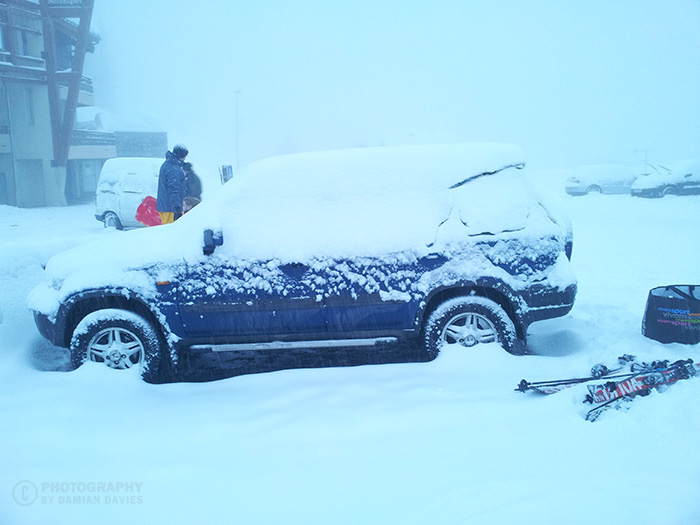
While working on an extended shoot in the Alps there were some “special moments” that needed recording.
Playing hunt the car in La Rosiere after a wonderful day skiing, France

Camera phones mean that accessibility and speed of use trump using traditional cameras,
in this case, to record some of the minutiae of life. Diamond Jubilee Year, bunting
everywhere and this still life inadvertently created by some children.
Worth getting the DSLR out? Probably not. Worth a camera shot? Definitely.

The off-season emptiness of a normally busy seaside resort; the disconsolate and dejected
combined with a blue filter emphasizing the chill and negative emotional tone. Exmouth, Devon.

Another winter scene and another “grab” shot for which camera phones come into their own.
Dusk settling over the River Taw estuary near Barnstaple, Devon. Thankfully I also
had a professional camera with me to capture this scene in high-resolution.
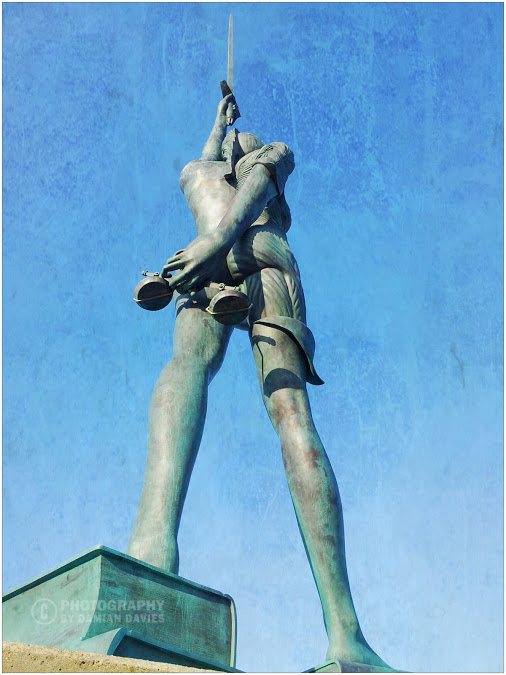
Damien Hirst’s awesome and huge statue Verity, Ilfracombe, Devon

While working in the UK…
Portsmouth harbour

While working in the UK…
Birmingham Bullring
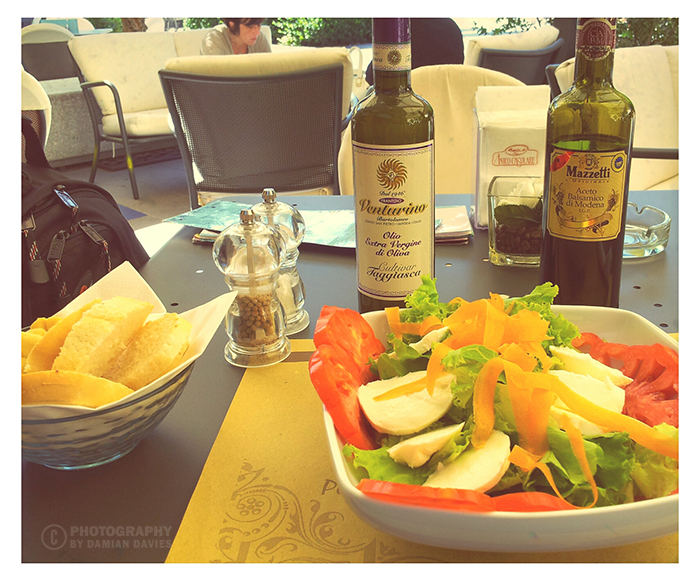
Lunch – Alba, Italy. Smartphone food shots? Surely not…

End of the day on the lungomare
Liguria, Italy
It’s been said that the introduction of digital cameras democratized photography, Kate Bevan writing in the Guardian newspaper believes that Instagram/Hipstamatic/Snapseed filters are the antithesis of creativity, and make all pictures look the same. While there is an element of truth in what she says, did 110, 126 or Disc camera images have the same issue? I would argue they did, more-or-less, due to the type of lenses these cameras used (mostly poor in the consumer ones) and the type and limitation of the film used. However, the thing that makes this a revolution in photography is the ease of use. This ease makes them suitable to shoot the minutiae of life that wasn’t shot in any great way before; leaving us a legacy of the everyday, the things you simply wouldn’t have photographed, in a social setting at least, when you had to pay for film and processing where each frame cost money. And, within that, creativity can blossom. Does it matter if the colour-casts and borders are all faux and similar to many others? Does it matter that everybody seems to shoot their meals and pets?
Despite some smartphone images being used commercially, broadly speaking the image quality is not suitable for this purpose. The reason a professional photographer has to spend thousands on equipment is for the size/quality of image that camera can produce (and reliability too of course). And to repeat an oft-repeated phrase: it’s not about the megapixels, it’s about the quality of the photosites, lenses, noise-reduction and sensor. However, given that an increasing number of advertising agencies and libraries are now accepting (and using) smartphone camera images, is it worth joining the throng? Or is this another fad like over-processed high dynamic range pictures was? Possibly. But there is a possibility of money being made from stock photography in this area. And let’s not forget, well processed HDR images (tone mapped images) are very usable. Few would know that they’d been processed this way.
For social use the smartphone camera is invaluable. It’s a more convenient Polaroid (albeit not used for testing exposure). For commercial photographers it’s an increasingly useful tool in the armoury. If you can make money with it, so much the better.