Posts

Fuji X-T1

evaluating the Fuji X-T1 as a lightweight walk around camera

Mt Ventoux and French vineyard by Devon commercial photographer Damian Davies

IN BRIEF

– Great lightweight camera.
– Out of camera jpegs superb on the whole.
– Really fun to use.
– Poor battery life.
– Superb viewfinder.
– Needs a bit more work though.

PREAMBLE

With Canon seemingly increasing the price of their cameras exponentially – the 5DIII costing 50% more-or-less more than the 5DII and the G1XII costing £200 more than the G1X, it is now time to look at some of the other offerings on the table – particularly a lightweight camera for walk around stock image gathering.

Canon and the 5D series in particular will remain my main camera for imaging – they offer a variety of professional features and superb image quality that I rely on. However, Panasonic and Sony have broken through what appears to a Canon/Nikon video complacency in recent years with two amazing cameras (GH4/A7s) offering 4K, high bit-rates and, in the case of Sony, amazing low light performance. In the stills arena, Fuji is taking on the giants with its professional camera X series including the latest X-T1 which offers professional performance in a lightweight, mirrorless, camera. The X-T1 isn’t cheap but it is highly rated.

A number of reviews of this camera have shown only monochrome images which seems to miss the point of having Fuji’s film emulation. So all images are colour.
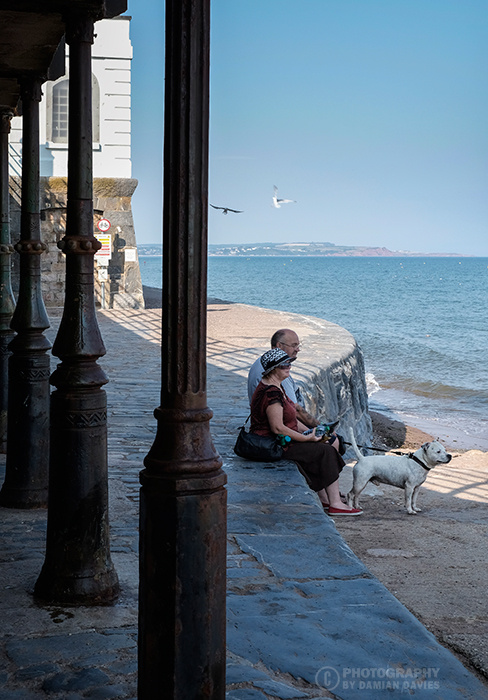
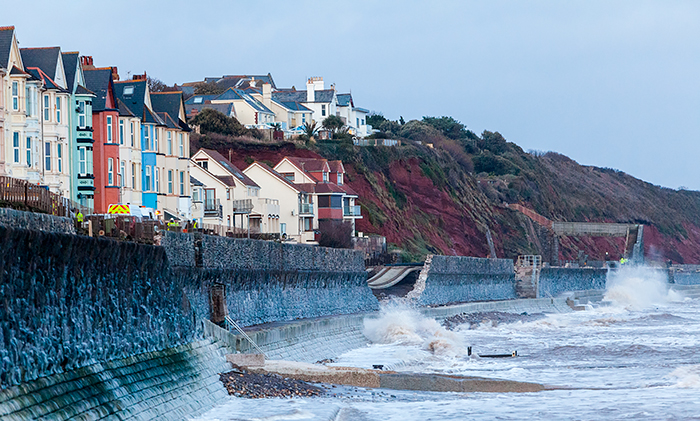
Image of the Devon seaside resort of Dawlish by Devon commercial photographer Damian Davies while testing the Fuji X-T1

A great example of the exposure latitude and colour palette of the X-T1. Bright, sunny day with deep shadows. This image was captured in PRO Neg.Std. If you want to chose another film version, opening any raw/raf using ACR offers a choice of emulation options for Fuji users from Velvia to Astia plus of course Adobe98

The introduction to market of these new cameras doesn’t diminish the quality of previous cameras and the 5DII especially produces great image quality. But the search here is on for a lightweight walk around camera. Partly a back-up camera and partly one that can be used for editorial stock and more.

Perhaps now would be a good time to preface this with the admission that I tried out the Fuji X100 and hated it. Well, hated all of it except the leaf shutter. More on that later. But technology develops and you cannot judge a company by just one camera. And with that over and done with – onwards…

Holidaymakers on Sidmouth seafront promenade, Devon. Commercial and editorial photographer Damian Davies working in Devon and the Southwest of England

1/455 sec / f/7.1 / ISO 200 / 46.3 mm (in 35mm: 69.0 mm) jpg recorded in PRO Neg.Hi with the XF18-55mm F2.8-4 R LM OIS lens
Below, a crop of the above image

Professional editorial photography in Devon and the southwest by Damian Davies

INTRODUCING THE X-T1

I’ll admit to being a big fan of Zack Arias. He produces some great images and loves this camera. So I thought it was worth a look. Now, all technical details can be found elsewhere. This is a real world trial (more than a test). Can it produce what I need?

Calais pier in France with departing ferries. Commercial photographer in Devon, Damian Davies

THE GOOD
  • On the whole, this camera produces outstanding jpegs*. The quality is largely excellent. For editorial stock the image can easily go straight from camera to agency. The exposure latitude (dynamic range) is breath-taking – highlights often being easily recoverable when needed along with shadows. The ability to chose the type of jpeg is another great and well executed idea. From a digital Velvia, through Provia and Astia to my favourite, PRO Neg.Std – photos with soft gradations and exceptional skin tones (in Fuji’s words and I cannot disagree with them). * NB also see “The Ugly” below
  • For those of us that remember when Fuji was king of film stocks and we used Velvia for stunning landscapes, Provia for a lot of professional work and Astia for weddings and the like, those days are sort of back again. To be frank, nothing is going to beat a large or medium format transparency film except a medium or large format digital sensor. It’s something new and it’s something good.
  • The XF 18-55mm F2.8-4 R LM OIS kit lens is brilliant. Any chromatic aberration or distortion is superbly dealt with by the camera’s internal processing resulting in out-of-camera jpgs free from most of them. A little distortion at the edges. Very slight.
  • The camera is lightweight – great for carrying around. It’s very similar to cameras of old -cameras like the Olympus OM4Ti, Yashica FX-D, Minolta X700 etc. It feels like an SLR.
  • The EVF (electronic viewfinder) is (let me just use this word again) brilliant as is the rear LCD panel.
  • The rubber eyecup is ideal for glasses wearers.
  • And the camera can be used reasonably stealthily. That’s always a bonus for editorial work.
  • High ISO/ASA images have well controlled noise.
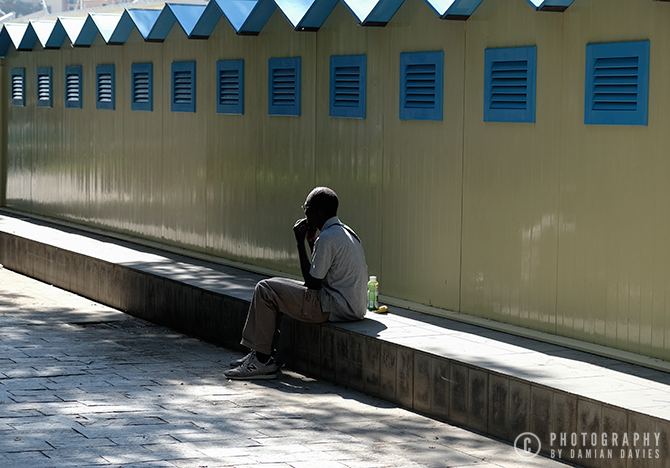
Beach huts and man eating in the shadows. Photography by Damian Davies and Lightworks media in Crediton, Devon

THE SO-SO

There are several things that don’t seem quite right at the moment.
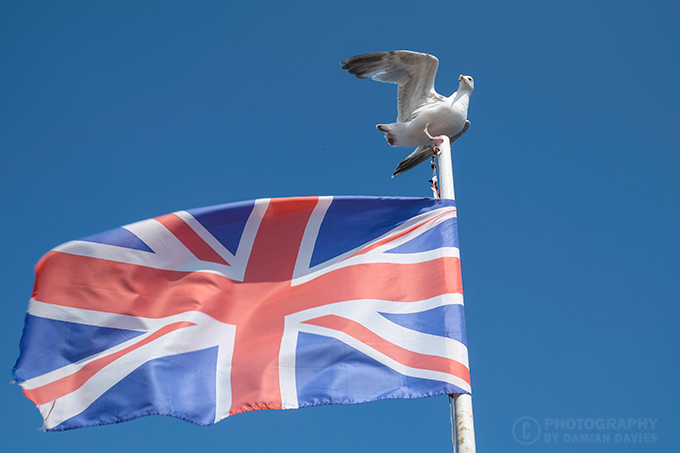
Seagull on top of a flag pole flying the union flag. Photographed in Teignmouth, Devon by Damian Davies

Seagull and Union flag in Teignmouth, Devon
This is an example of the orange/red issue. Image from raw/raf processed in Adobe98 colour space. The camera in some seems to mute/alter the colour in this specific range. This can be fixed in Photoshop by changing the orange and red hue sliders.
  • The reproduction of orange and red hues as seen above. This is not an effect of film simulation – the above image being processed from raf/raw without film emulation.
  • In my experience in certain circumstances the camera struggle to achieve focus. I haven’t worked out why or when precisely. On the whole there is no problem – certainly more accurate and quicker than my current Canon offerings and a world away from the Canon G1X, my previous walk around camera. Generally, it’s also very fast. It’s just one or two things that throw it off balance occasionally. I’ve also noticed that sometimes it struggles to track objects.
  • Battery life. Struggled to last through one shoot. The battery seems to go from 2 bars (out of three) to a red one bar very quickly. So the first thing I’ve had to do is buy a spare. And not a Fuji one (which was prices at £40+). Good ones by alternative manufacturers available from £10.
  • Dynamic range. A double edged sword. While extra dynamic range is excellent in most situations, sometimes the out of camera jpgs are very flat and it takes a fair bit of post production to increase blacks and contrast to produce an acceptable image.
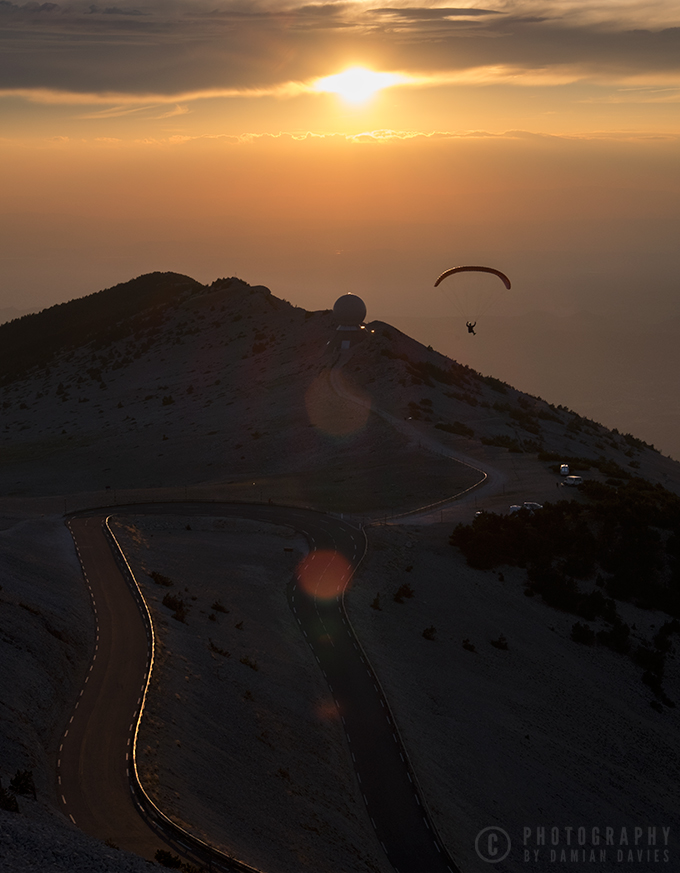
Mt Ventoux at dusk, France, photographer Damian Davies photographing in Britain and throughout Europe.

Shooting directly into the setting sun on Mt Ventoux to test lens flare.
1/400th f11 ISO/ASA 400
THE UGLY

I hesitated before adding this. This is a really nice camera to use but there’s one increasingly annoying issue…the “watercolour” effect. Now this is a big issue. It only seems to happen on certain objects/scenes and occasionally.

Image of Bormio church testing the Fuji X-T1 for the watercolour effect

Out of camera jpg top and raw file below processed in Photoshop. 1/320th f11 ISO 320 – 100% crop.
The mountains and church bell tower in the jpg have a “painterly”, mushy effect.
WISH LIST

1. The exposure compensation dial which I knocked on several occasions needs a lock!
2. I personally didn’t find the d-pad to be too bad – though others have complained about it.
3. The battery door could do with some kind of auto locking mechanism
4. The flash PC sync socket cover on the front of the camera needs to be fixed to the camera somehow to stop it being lost. Yes, mine’s gone already!
5. Better battery. Battery life is poor.
6. A built-in neutral density filter would be a real bonus.
7. It’s a shame Fuji didn’t manage to equip the X-T1 with the leaf shutter the X100 had. A leaf shutter is the holy grail as far as working with flash in strong sunlight is concerned. Now that would be worth an extra hundred in anyone’s money.
8. XF10-24mmF4 R OIS. The kit lens (XF18-55mmF2.8-4 R LM OIS) is so much more than a kit lens – it’s part of Fuji’s professional line-up of lenses and feels like it. All the same 18mm on this sensor equates to about 27mm on a full frame camera and for me is not quite wide enough at times. The 10-24mm = 15-36mm in full frame terms and is most definitely on the wish list.
9. Larger sensor. Yes, size does matter!

Photographer in Devon, Damian Davies. Ice cream van on Plymouth Barbican

OTHER THOUGHTS

What can I do to make light of this dull, dull day? One of the most trying times, when using a camera and attempting to produce some professional and publishable results, is when the weather is playing down and dirty while you are shooting using only natural light. A baptism of fire then for the Fuji X-T1 on the day it was bought (and without reading the manual in any great depth). The location was Paignton and the rains began and never really stopped. How would the camera fare in these conditions?
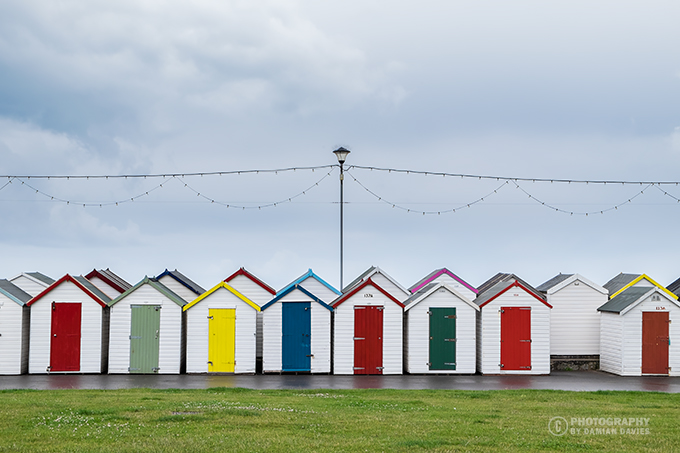
Testing out the Fuji XT-1 on Paignton seafront, Devon, by Devon commercial photographer, Damian Davies.

Flat light, storm clouds and rain, Paignton seafront, Devon, during a brief respite from the “liquid sunshine”
24.3mm (51mm full frame equivalent). 1/350 sec @ f/11 ISO 400

The conditions the image above was taken in is always a good test to see if the camera is able to lift the images in totally flat light with dark clouds and heavy rain. The ISO (or ASA) was pumped up to 400 and, while evaluating the XF18-55mm F2.8-4 R LM OIS lens, an aperture of f11 was chosen to find the “sweet spot” for images. A little pincushion distortion at 24.3mm (see left hand side of image) but nothing too bad. The image was processed from raw (or raf in Fuji’s terms) with exposure and highlights altered a little (+0.95/-78), shadow and whites up to +9 and +12 for clarity and +18 for vibrance. No saturation increase.

JPEG & RAW

The out of camera jpgs are great. The internal processing of the image file is very good. So what about raw/raf? These need a little work in Photoshop to compensate for chromatic aberration etc. From raw/raf you have the option to apply a Fuju film picture style or leave the image as is and process as Adobe 98 or sRGB image.
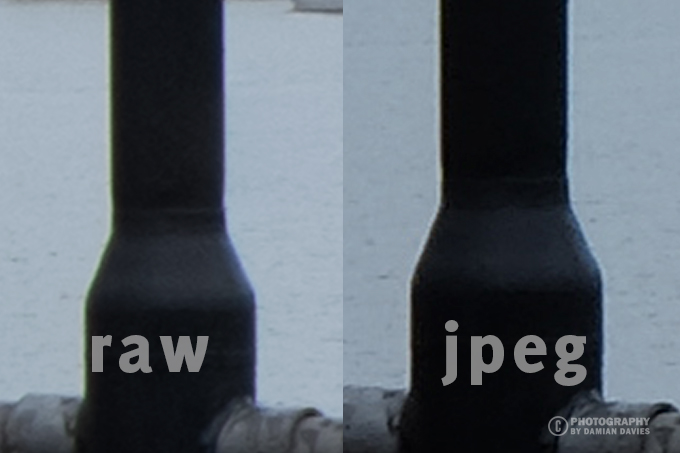
Beach huts on Paignton seafront photographed by Devon commercial and editorial photographer Damian Davies

Extreme pixel-peeping. At 300% chromatic aberration is evident in the lamp post in the raw file (left), showing green on one side and red on the other, but can be quickly dispensed with in Photoshop. The out-of-camera jpeg exhibits the “clean” results of CA processing (right) with a slight halo. Let me, again, say this is at 300%!
CONCLUSION

It’s a superb camera. There are a few niggles, some minor some not so minor, but on the whole it’s a joy to use. There are times I wished I’d used my full frame camera for a shot and then realised that I would only have been carrying a small, lightweight camera around, not the larger beast.

Photographers searching for one camera that fits all briefs will be disappointed. Is there ever one camera that can offer everything? I think not. I do think that it is the start of a great camera and at this stage it’s doing very well. But I want it to do better! And I hope Fuji are taking on-board these comments, from me and others, to make the necessary improvements and wish lists.

As it is, yes I’m pleased to have it because there are a whole lot of shots I would not have got without it. This camera excels at images of people with excellent skin tones. However Fuji, focus tracking and the “watercolour” effect need to be addressed.

Sunbathers feet on Sidmouth beach photographer Damian Davies specialising in commercial and editorial photography in Devon, Somerset and the southwest of England

Damian Davies is a commercial and editorial photographer working in Devon and throughout the UK and Europe. With occasional forays elsewhere… get in touch
Daily Mail coverage of the rail track repairs at Dawlish, Devon, England, with photography by Lightworks Commercial and Editorial Photography

Dawlish Mail

Shooting for Network Rail in the wake of the Winter storms

Daily Mail coverage of the rail track repairs at Dawlish, Devon, England, with photography by Lightworks Commercial and Editorial Photography

Daily Mail coverage of the re-opening of the railway line at Dawlish, Devon

Damage to the sea wall at Dawlish, Devon

Shooting hand-held at dusk (it was actually almost dark) with a telephoto lens trying to avoid the spring tidal surge (threatening to engulf you and the equipment any moment) while persuading the police to let you through because you must get the shot. No easy task. This is the top image in the Mail’s coverage.

pre2

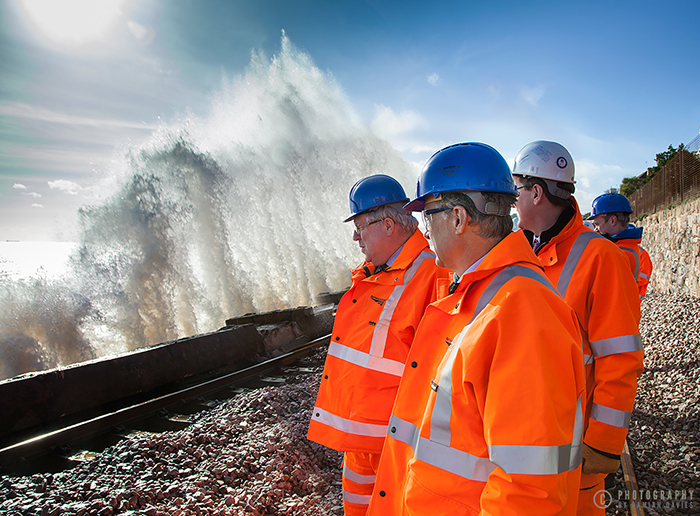
Government Minister, Patrick Mcloughlin with Network Rail Boss, Mark Carne, inspecting the damage at Dawlish while attempting to dodge spring tides hitting the already broken sea wall. Worthy of note is the bizarre weather; cloudy and stormy one moment followed by moments of blindingly bright sunshine.

Inspecting the railway damage at Dawlish, Devon with Editorail photography by Lightworks

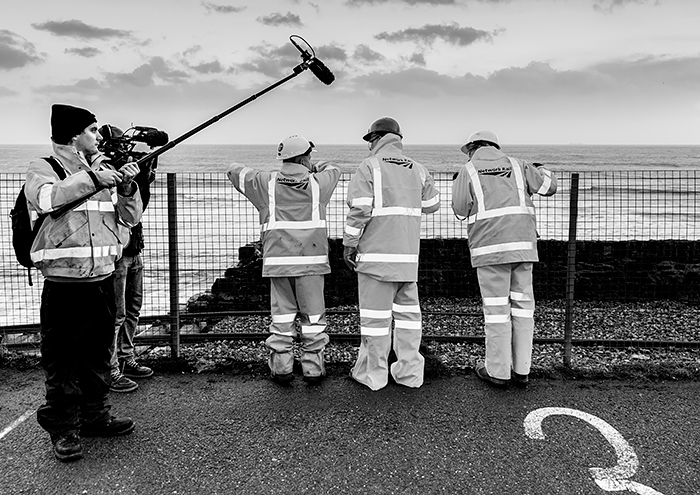
A huge amount of media attention followed the events at Dawlish, Devon.
Here a crew shoot for a documentary on First Great Western

Machinery and workers get a soaking as waves constantly batter what's left of the sea wall at Dawlish, Devon

Machinery and workers get a soaking as waves constantly batter what's left of the sea wall at Dawlish, Devon
For commercial and editorial photography in Devon get in touch

Westward Ho!

shooting video at Westward Ho Devon

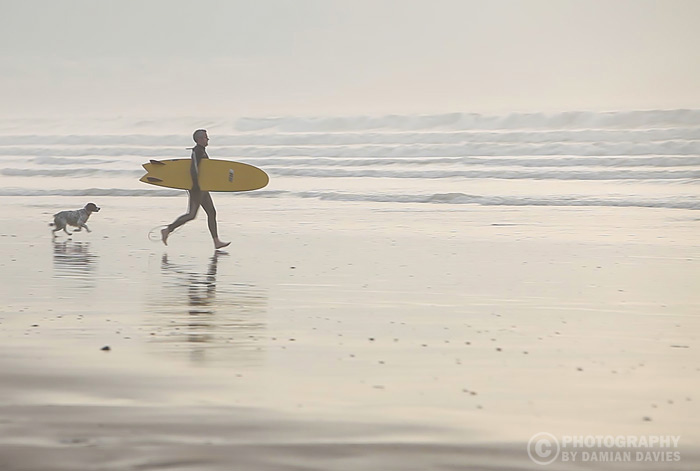
Creative Video of surfer in Westward Ho North Devon

A test desaturated yellow colour grade using a still from the shoot

Shooting a video can be tough, especially when the sun is out and the temperatures finally creep up to 16C. This is a still from one of the longer term video projects I’m currently engaged with. Today’s location being Westward Ho! in North Devon – a place, I have to admit, that I have rarely been to before now. Ice cream vans, cafes selling great coffee and great weather. What’s not to like?

Colour grading a film or video is an immensely difficult art – for people not used to it at least. It can take weeks to do. Here I’m just experimenting with ideas and looks, in particular the warm, yellowish (Kodak film), washed-out (i.e. desaturated) and vintage look suits the images but may not suit the film in its entirety.

This video, being kept under wraps pro tem, will hopefully be ready in late 2014.

Exmoor Beast 2

Version 2 of this video is in colour and has a couple of clips from the riders talking about the sportive/challenge. This was the original cut, more-or-less, but due to time constraints this version had to be put on ice temporarily.

One of the toughest sportives of the season, The Exmoor Beast (starting in the Devon town of Tiverton), takes riders up both the pleasantly rolling and leg-burning hills of Exmoor in Somerset. Beautiful scenery is thrown in for free as is the obligatory dose of unpredictable and sometimes seemingly vindictive West Country autumnal weather.

More information http://www.exmoorbeast.org.

Technical:
5d mark II w/ Magic Lantern
25fps
Premiere Pro
After Effects
Magic Bullet Looks

exmoor beast cycling sportive video shot in Devon and Somerset

Exmoor Beast Video

One of the toughest sportives of the season, The Exmoor Beast (starting in the Devon town of Tiverton), takes riders up both the pleasantly rolling and leg-burning hills of Exmoor in Somerset. Beautiful scenery is thrown in for free as is the obligatory dose of unpredictable and sometimes seemingly vindictive West Country autumnal weather.

The decision to make the video black and white was simply for aesthetics – an artistic decision.

More information http://www.exmoorbeast.org.

Technical:
5d mark II w/ Magic Lantern
25fps
Premiere Pro
After Effects
Magic Bullet Looks.

Budleigh Spring

You either love it or you hate it. 6×6 (square) photographs force you to look at the shapes, the graphic lines created and how they interact with the frame. The symmetry (or asymmetry) and composition are vital aspects of this

Exmouth Winter

Exmouth Winter Days video

An experimental video motivated by being drawn to a seaside resort in off-season. What storyline? Initially it was shoot and see what happens. A creative exercise. As time drew on, I realised the weather (variable to say the least) was the narrative – the rain driving me away from the town but leaving with memories of better days – which pretty much summed-up the filming of this piece. The draw was the idea of seaside resorts with fading splendour deserted in the winter but, as I discovered, there wasn’t much in the way of faded splendour – more an active out-of-season resort with always something going on and, more often than not, a sandy paradise for dogs and their owners.

ewd

TECHNICAL

One of the greatest issues to counter and overcome was, unsurprisingly perhaps, the awful weather or more accurately, the constant battering wind. A 1.4X converter was used on the 200mm f2.8 lens for most shots to give cinematic throw to the image and reduced depth of field. However, even the slightest wind-induced camera shake rendered the footage unusable (except for one or two clips After Effects managed to stabilise sufficiently). And there was a lot of wind. Did I mention the wind? The film was edited in Premiere Pro and graded in PP and Magic Bullet Looks. Magic Lantern was used during the recording achieving an average bit rate of 50mbps which definitely helped during the grading.

View video on Vimeo here

PhotoEthics

Musings on the Ethical implications of image manipulation and more

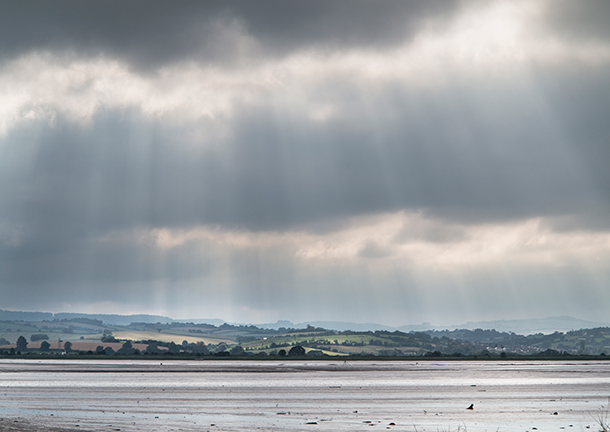
Streams of sunlight breaking through the cloud over the Exe estuary, Devon.

1. Streams of sunlight breaking through the cloud over the Exe estuary, Devon.
Monochrome image conversion using Silver Efex

Since photography began, images have been manipulated to show what the photographer or client intended whether that be by choice of film and lighting, by negative (or positive) processing technique, or colouring, burning and dodging prints amongst others. In photojournalism, image manipulation is a no-no, the clue being in the word stem journalism defined by the Oxford English Dictionary as “the practice of communicating news by photographs”. If the image is manipulated so is the message (the news) it is conveying and with that the bias, effectively news becomes propaganda ( information, especially of a biased or misleading nature, used to promote a political cause or point of view – OED). There is a school of thought that says no image can be totally objective which is of course true. Interpretation (of a story or event) is an integral part of journalism. The journalist interprets what the event they see, read and hear and this interpretation can lead to bias. This is no different with photography and photojournalism:

Questions of interpretation 1.

Where do you shoot from? Police lines or protester lines? Embedded or free agent in a war zone? How does the perspective from which you shoot alter the image you are shooting in terms of objectivity? What do you include, what do you leave out? How much of the story do you cover?

Questions of interpretation 2.

How do you interpret the image afterwards when processing it? While burning and dodging helps to focus the eye and create a visually pleasing image, including or excluding elements that are there in the original captured frame is generally thought of to be unethical in photojournalism (see National Geographic moves pyramids for cover shot, Reuters Apologizes Over Altered Lebanon War Photos etc etc.) The Washington Post came under attack for using HDR (High Dynamic Range) images to illustrate a story of a plane that crashed into a bridge 30 or so years ago. HDR images are very much in fashion at present. They are captured from several frames that are then blended (usually). This means there is no one decisive moment. The image is mixture of images. Should newspapers be using images that are creative amalgamations or does their use diminish the paper in the eyes of those who believe all papers should use accurate images that reflect the ethics of photojournalism? The argument here is one of artistic interpretation (of an event) rather than a singular image of the event with no alteration to any of the key aspects of the image.

So what of other areas of photography?

river exe estuary near topsham, devon

2. Processed as an RGB image in Photoshop

Well, In other areas of photography there seem to be few ethical considerations as far as image manipulation is concerned (but other forms of photography do have some ethical guidelines as far as shooting and portraying the image are concerned). And so we move onto stock photography. This image is of the River Exe estuary late in the afternoon. It was shot for stock, that is for commercial or editorial stock. Here the division regarding art and journalism becomes pronounced. The top, monochrome, image (1) is great as an art photograph but not as editorial stock. I would argue that the the heavy manipulation forces it out of the editorial arena by nature of that (overt) manipulation. Editorial images are generally illustrative and while I have no doubts this could illustrate something, that is not its natural home. This is not photojournalism and the over-riding consideration is aesthetics or saleability, not ethics. Had it been more subtle then it way well be fine after all; the image is “reality” in that nothing has been added bar image conversion additions (ones that could well have been done with traditional wet processing chemistry). The image above (2) has had an increase in clarity, saturation and contrast along with selective burning and dodging (as can be seen in the RAW image 3. below). In a similar way to the physical film negative, the RAW file is, effectively, a template from which to make the final image. Both allow for adjustments to create a final product.

exe estuary near exeter, devon

3. This is the RAW image converted to sRGB

While this wasn’t intended to be full discourse on the ethics of photography, more musings, ramblings and general thoughts on this issues that affect photographers, it is interesting to examine the guidelines and accepted practices if only to make us think about it more, the worth of photography and its standards.

From Ethics to Other Values

We are in a post-modernist, digital, throwaway society. To some, the value we ascribe to images seems to be diminishing in the Instagram world where images are ubiquitous. To others, the news that more people than ever are taking photographs is a sign that it is more important than ever before. So, aside from image integrity, how much value do we place on photography and photographs? If, in the image above, I said that I had waited for four hours for the clouds to move into position, the sunlight to come through and the tide to be just right, you may view the monochrome picture as a piece of art. If I said that I was cycling past the scene, jumped off the bike and took a quick picture does that diminish the worth of the photo? If a great image is snapped on a smartphone does the same apply?

The language of modern photography – in brief

The language of photography itself can demean a picture. Photojournalists were, and are, often referred to as “snappers” which has connotations of a lack of skill. Likewise the now overused phrase “great capture” is often used by the amateur photographer. Semantically similar to snapper, capture seems to indicate something not quite as skilled as photographing, making or taking a picture but just capturing what is there. Capture, the word, is one often used in digital, not film, photography to describe the electronic process of making an image i.e. Digital Image Capture or digitisation. Is the photograph a “great snap” or a “beautiful photograph”? Did the photographer “get a great capture” or “make a stunning image”. Is digital imagery making us forget that behind great images there is almost always a great deal of skill?

Exmouth Festival

exmouth festival sand sculpture on exmouth beach, devon, england

Sand Sculpture on Exmouth beach, Devon, England, during the seaside town’s annual festival held during Spring/Early Summer. The low and gentle sculpting light aided by Fuji Velvia 35mm film helping to bring the images (and sand creations) to life.

exmouth festival sand sculpture on exmouth beach, devon, england

Bowerman’s Nose

bowerman

Bowerman’s Nose is one of the classic rock formations on Dartmoor, Devon, England. This distinctive granite outcrop has the profile of a human face. The image was shot on a Bronica GS-1 with Fuji Velvia producing a high quality medium format 6×7 image.

The Legend

A huntsman called Bowerman lived on the moor around one thousand years ago. When chasing a hare he and his pack of dogs unwittingly ran into a coven of witches, overturned their cauldron and disrupted their ceremony.

The witches decided to punish him, and the next time he was hunting, one of the witches turned herself into a hare, and led both Bowerman and his hounds into a trap as punishment. The witches turned them to stone – the huntsman became the rock formation now known as Bowerman’s Nose with the dogs the broken stones at his feet.