Posts

The Printer’s Art

selenium toned silver print of venice

venicepre

Is it Photoshopped? No. despite not going through Photoshop, many traditional silver-based photo prints did have alterations as this picture shows; highlights, shadows, contrast, burning-in and more – all the skills learned over time in the dark and, most, necessary adjustments from a negative or positive to craft the image.

Producing a monochrome photographic print today remains an enjoyable task, one where you can get your hands dirty and have a tangible, physical product at the end of it. Achieving a high quality print is still no mean feat. The picture above was a test exposure with comments and guidance notes for subsequent exposure/development written – even scrawled albeit artistically – in chinagraph pencil.

The paper used was Agfa’s wonderful Record Rapid which had a Baryta base and produced rich, warm blacks. The Online Darkroom suggests Agfa stopped making Record Rapid in about 2003. Apparently the original paper contained Cadmium which really isn’t something you want to be handling with bare hands. Regardless, the paper had a huge fan base and is missed.

This image was shot one early November day when the rain didn’t stop, it was cold and there was seemingly nothing that would entice you to photograph Venice, let alone be there. However, it is at times like this, when there are few tourists and everything seems to be against the photographer, that the real atmosphere of the working Venice can be felt.

Traditional photography using medium format and 35mm is one of the specialised services we are happy to offer clients in Devon and throughout the UK for specialised shoots, ad campaigns and more along with our digital work. Need convincing about the role of analogue photography in a digital age? Just have a look at the analogue work of celebrity and political photographer Platon…

The final print of this image can be seen in the Personal Work Gallery.

A Year of Instagram

** This post was originally published in 2014 and is now out of date! **

Every New Year the newspapers and magazines are full of reviews, looking back over the year and forward to 2013. Breaking the mould, it seemed like a good opportunity reflect on a few years in March, not January, with the Samsung Galaxy S2 and iPhone4s. Originally sceptical about using these smartphone cameras for anything but fun, the last few years with them has shown that this is a very useful tool for working photographers; a tool that allows you to work on project ideas without having to lug a heavy DSLR around and, for me at least, gives a feeling of creative freedom. Increasingly image libraries and advertising agencies have caught up working with smartphone images for stock & campaigns (of which, more below the pictures).

These photographs are a small sample of images used for anything from Facebook to emailing clients. They’re not a “best of”, simply ones that almost self-selected themselves as “examples of” for this write-up.

Below the photos is a short discourse on the use of camera phone images and, I should disclose that while mentioning Instagram above, these shots were all produced with the rather brilliant Pixlr Express.

One of the key points about smartphones is the ability to catch moments and memories, ones that may or may not mean anything to anyone else. And with that important note noted…the pictures.
POST01

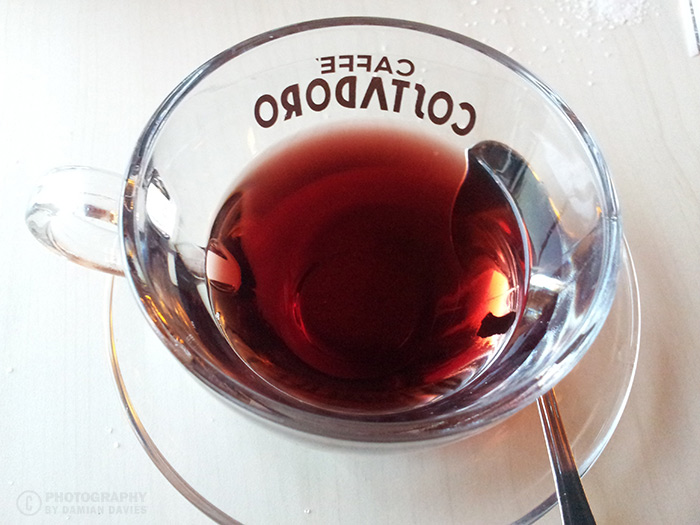
The sheer joy of Vin Chaud to warm you up after a day on the ski slopes
Not worth a DSLR shot, perhaps, but worth a camera phone snap for the memories
Pragelato, Italy
POST02

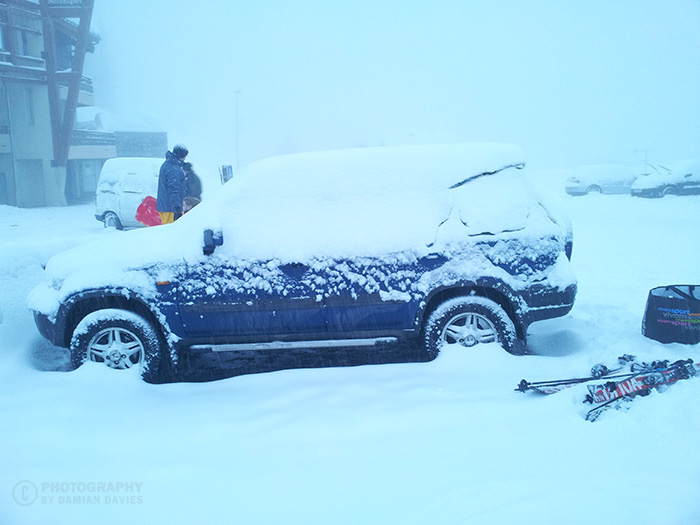
While working on an extended shoot in the Alps there were some “special moments” that needed recording.
Playing hunt the car in La Rosiere after a wonderful day skiing, France

POST03

Camera phones mean that accessibility and speed of use trump using traditional cameras,
in this case, to record some of the minutiae of life. Diamond Jubilee Year, bunting
everywhere and this still life inadvertently created by some children.
Worth getting the DSLR out? Probably not. Worth a camera shot? Definitely.

POST04

The off-season emptiness of a normally busy seaside resort; the disconsolate and dejected
combined with a blue filter emphasizing the chill and negative emotional tone. Exmouth, Devon.

POST05

Another winter scene and another “grab” shot for which camera phones come into their own.
Dusk settling over the River Taw estuary near Barnstaple, Devon. Thankfully I also
had a professional camera with me to capture this scene in high-resolution.
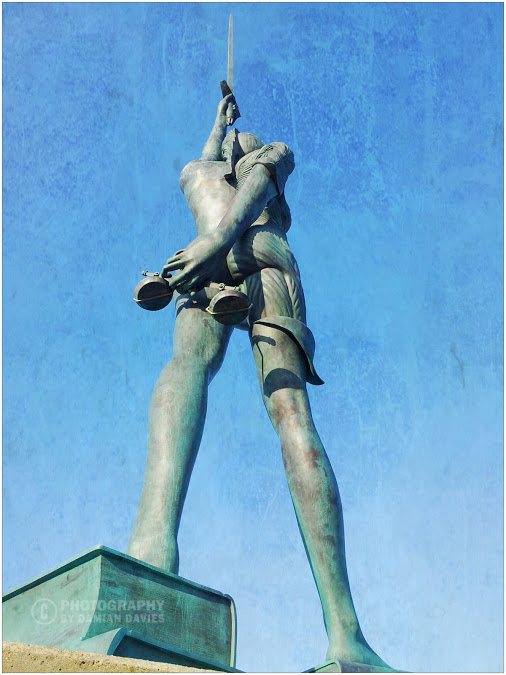
Damien Hirst's statue of Verity in Ilfracombe North Devon. Photography by Damian Davies

Damien Hirst’s awesome and huge statue Verity, Ilfracombe, Devon

POST08

While working in the UK…
Portsmouth harbour

POST010

While working in the UK…
Birmingham Bullring
POST09

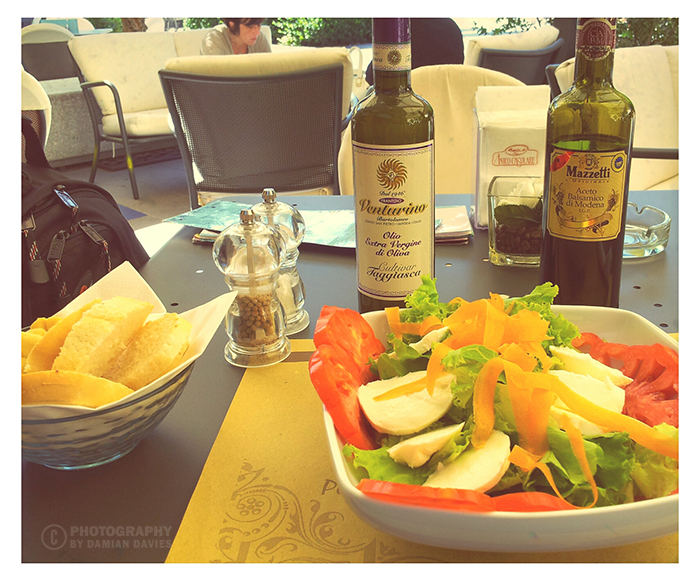
Lunch – Alba, Italy. Smartphone food shots? Surely not…

POST011

End of the day on the lungomare
Liguria, Italy

It’s been said that the introduction of digital cameras democratized photography, Kate Bevan writing in the Guardian newspaper believes that Instagram/Hipstamatic/Snapseed filters are the antithesis of creativity, and make all pictures look the same. While there is an element of truth in what she says, did 110, 126 or Disc camera images have the same issue? I would argue they did, more-or-less, due to the type of lenses these cameras used (mostly poor in the consumer ones) and the type and limitation of the film used. However, the thing that makes this a revolution in photography is the ease of use. This ease makes them suitable to shoot the minutiae of life that wasn’t shot in any great way before; leaving us a legacy of the everyday, the things you simply wouldn’t have photographed, in a social setting at least, when you had to pay for film and processing where each frame cost money. And, within that, creativity can blossom. Does it matter if the colour-casts and borders are all faux and similar to many others? Does it matter that everybody seems to shoot their meals and pets?

Despite some smartphone images being used commercially, broadly speaking the image quality is not suitable for this purpose. The reason a professional photographer has to spend thousands on equipment is for the size/quality of image that camera can produce (and reliability too of course). And to repeat an oft-repeated phrase: it’s not about the megapixels, it’s about the quality of the photosites, lenses, noise-reduction and sensor. However, given that an increasing number of advertising agencies and libraries are now accepting (and using) smartphone camera images, is it worth joining the throng? Or is this another fad like over-processed high dynamic range pictures was? Possibly. But there is a possibility of money being made from stock photography in this area. And let’s not forget, well processed HDR images (tone mapped images) are very usable. Few would know that they’d been processed this way.

For social use the smartphone camera is invaluable. It’s a more convenient Polaroid (albeit not used for testing exposure). For commercial photographers it’s an increasingly useful tool in the armoury. If you can make money with it, so much the better.

Cosworth Group

Products and people for Adaero precision instruments

Specialist component product photography for adaero cosworth group in Crediton, Devon

Specialist component product photography for adaero cosworth group in Crediton, Devon

We recently had the great pleasure to undertake some technical photography for precision component manufacturer, Adaero, part of the Cosworth group.

A separate page has been created to show of some of Adaero’s beautiful products (from medical to aerospace by way of a hundred other industries) in finer detail which can be found here.

Exeter University

exeter university new forum extension image, Exeter, Devon
exeter university new forum extension image2, Exeter, Devon
exeter university new forum extension image 3, Exeter, Devon
exeter university new forum extension image 4, Exeter, Devon

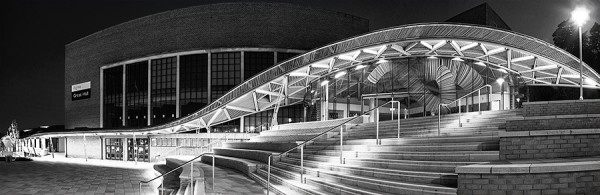
These images, shot for Exeter University, show the exterior of the University’s Forum – a new £48 million centrepiece at the heart of the Streatham Campus. The flowing, arching design by Wilkinson Eyre Architects.

PhotoEthics

Musings on the Ethical implications of image manipulation and more

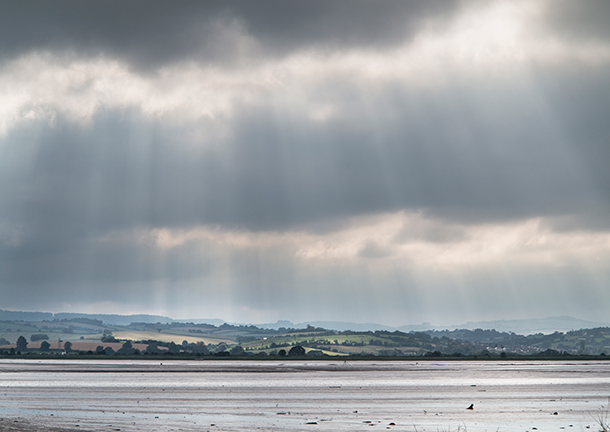
Streams of sunlight breaking through the cloud over the Exe estuary, Devon.

1. Streams of sunlight breaking through the cloud over the Exe estuary, Devon.
Monochrome image conversion using Silver Efex

Since photography began, images have been manipulated to show what the photographer or client intended whether that be by choice of film and lighting, by negative (or positive) processing technique, or colouring, burning and dodging prints amongst others. In photojournalism, image manipulation is a no-no, the clue being in the word stem journalism defined by the Oxford English Dictionary as “the practice of communicating news by photographs”. If the image is manipulated so is the message (the news) it is conveying and with that the bias, effectively news becomes propaganda ( information, especially of a biased or misleading nature, used to promote a political cause or point of view – OED). There is a school of thought that says no image can be totally objective which is of course true. Interpretation (of a story or event) is an integral part of journalism. The journalist interprets what the event they see, read and hear and this interpretation can lead to bias. This is no different with photography and photojournalism:

Questions of interpretation 1.

Where do you shoot from? Police lines or protester lines? Embedded or free agent in a war zone? How does the perspective from which you shoot alter the image you are shooting in terms of objectivity? What do you include, what do you leave out? How much of the story do you cover?

Questions of interpretation 2.

How do you interpret the image afterwards when processing it? While burning and dodging helps to focus the eye and create a visually pleasing image, including or excluding elements that are there in the original captured frame is generally thought of to be unethical in photojournalism (see National Geographic moves pyramids for cover shot, Reuters Apologizes Over Altered Lebanon War Photos etc etc.) The Washington Post came under attack for using HDR (High Dynamic Range) images to illustrate a story of a plane that crashed into a bridge 30 or so years ago. HDR images are very much in fashion at present. They are captured from several frames that are then blended (usually). This means there is no one decisive moment. The image is mixture of images. Should newspapers be using images that are creative amalgamations or does their use diminish the paper in the eyes of those who believe all papers should use accurate images that reflect the ethics of photojournalism? The argument here is one of artistic interpretation (of an event) rather than a singular image of the event with no alteration to any of the key aspects of the image.

So what of other areas of photography?

river exe estuary near topsham, devon

2. Processed as an RGB image in Photoshop

Well, In other areas of photography there seem to be few ethical considerations as far as image manipulation is concerned (but other forms of photography do have some ethical guidelines as far as shooting and portraying the image are concerned). And so we move onto stock photography. This image is of the River Exe estuary late in the afternoon. It was shot for stock, that is for commercial or editorial stock. Here the division regarding art and journalism becomes pronounced. The top, monochrome, image (1) is great as an art photograph but not as editorial stock. I would argue that the the heavy manipulation forces it out of the editorial arena by nature of that (overt) manipulation. Editorial images are generally illustrative and while I have no doubts this could illustrate something, that is not its natural home. This is not photojournalism and the over-riding consideration is aesthetics or saleability, not ethics. Had it been more subtle then it way well be fine after all; the image is “reality” in that nothing has been added bar image conversion additions (ones that could well have been done with traditional wet processing chemistry). The image above (2) has had an increase in clarity, saturation and contrast along with selective burning and dodging (as can be seen in the RAW image 3. below). In a similar way to the physical film negative, the RAW file is, effectively, a template from which to make the final image. Both allow for adjustments to create a final product.

exe estuary near exeter, devon

3. This is the RAW image converted to sRGB

While this wasn’t intended to be full discourse on the ethics of photography, more musings, ramblings and general thoughts on this issues that affect photographers, it is interesting to examine the guidelines and accepted practices if only to make us think about it more, the worth of photography and its standards.

From Ethics to Other Values

We are in a post-modernist, digital, throwaway society. To some, the value we ascribe to images seems to be diminishing in the Instagram world where images are ubiquitous. To others, the news that more people than ever are taking photographs is a sign that it is more important than ever before. So, aside from image integrity, how much value do we place on photography and photographs? If, in the image above, I said that I had waited for four hours for the clouds to move into position, the sunlight to come through and the tide to be just right, you may view the monochrome picture as a piece of art. If I said that I was cycling past the scene, jumped off the bike and took a quick picture does that diminish the worth of the photo? If a great image is snapped on a smartphone does the same apply?

The language of modern photography – in brief

The language of photography itself can demean a picture. Photojournalists were, and are, often referred to as “snappers” which has connotations of a lack of skill. Likewise the now overused phrase “great capture” is often used by the amateur photographer. Semantically similar to snapper, capture seems to indicate something not quite as skilled as photographing, making or taking a picture but just capturing what is there. Capture, the word, is one often used in digital, not film, photography to describe the electronic process of making an image i.e. Digital Image Capture or digitisation. Is the photograph a “great snap” or a “beautiful photograph”? Did the photographer “get a great capture” or “make a stunning image”. Is digital imagery making us forget that behind great images there is almost always a great deal of skill?

Andalucian Elements

a51

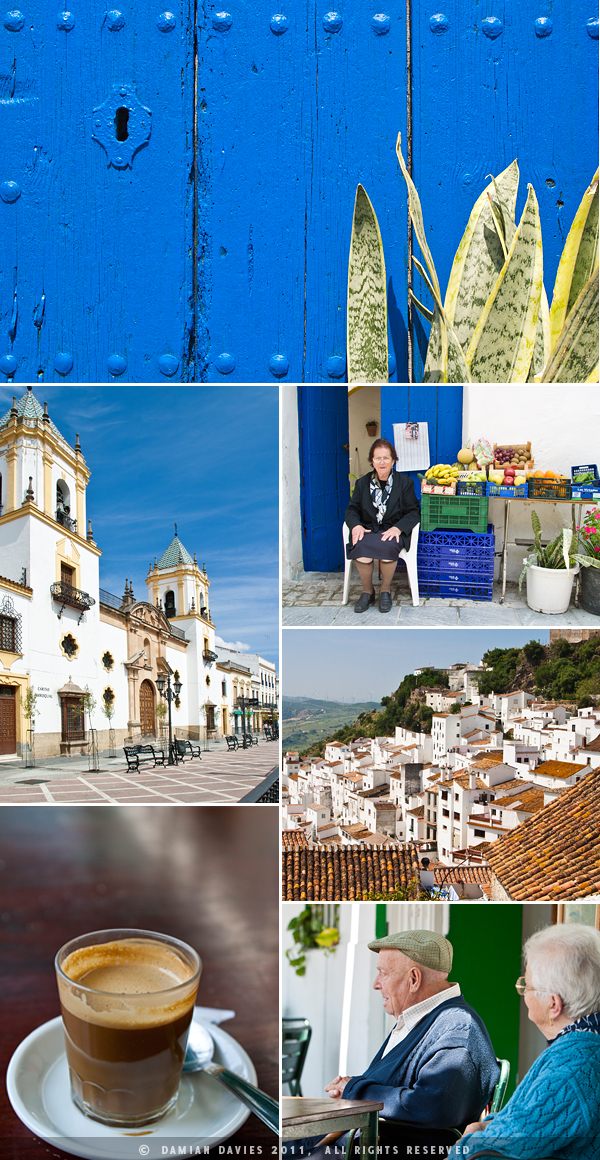
Elements of Spain. This was originally part of a commissioned shoot in Andalucia, Spain, focusing on property people and lifestyle. In these images Ronda, Tarifa, Conil de la Frontera, Vejer de la Frontera, Grazalema and the white town of Casares.

All images are now available for licensing.

Andalucian Elements part I is here

Life in LO-FI

2011-12-23-11.14

2011-12-23-11.142

2011-12-23-11.143

** This post was originally published in 2012 and is now out of date! **

Adding an ability to shoot some images quickly and of enough quality for social media uses (Facebook, Google+) is useful in providing clients more “bang for their buck”. This shoot, for Ski Famille was in the ski resorts of Les Gets and Reberty in France, and, where time allowed, the brilliant quality of the Samsung Galaxy S2 was used to shoot some latest snow and resort view images for Facebook.

While phones (whether iPhone or whatever) can now provide high enough quality for this target, the images are still very much lo-fi; heavily processed and compressed jpgs in sRGB as opposed to the hi-fi Canon 5D MarkII images which are shot in RAW and carefully post-processed into the larger colour space of aRGB, colour-corrected, burned and dodged etc and have a much larger file size with quality photosites and pixel density.

Having said that, the ability to fulfil immediate social media needs using the smartphone camera is a boon and in demand. Having the ability to fulfil that demand with this phone is a pleasure and another weapon in the photographic armoury.

For more information about custom ski and property shoots for brochures, web and Facebook get in touch here

Andalucian Elements

a4

Elements of Spain. This was originally part of a commissioned shoot in Andalucia, Spain, focusing on property people and lifestyle. In these images Ronda, Tarifa and the white town of Casares. All images are now available for licensing.

WTMarket

PORTHNANVEN

luminaria

Nice

clouds009

The World Travel Market takes place at Excel in Docklands, London, in the week beginning the 7th of November. Already with a couple of meetings planned, it will be an excellent opportunity to meet others involved in tourism from around the world to discuss plans, make contacts and view portfolios.

To book a meeting for the event telephone +44 (0)7767-787351 or contact here

Ski Brochures II

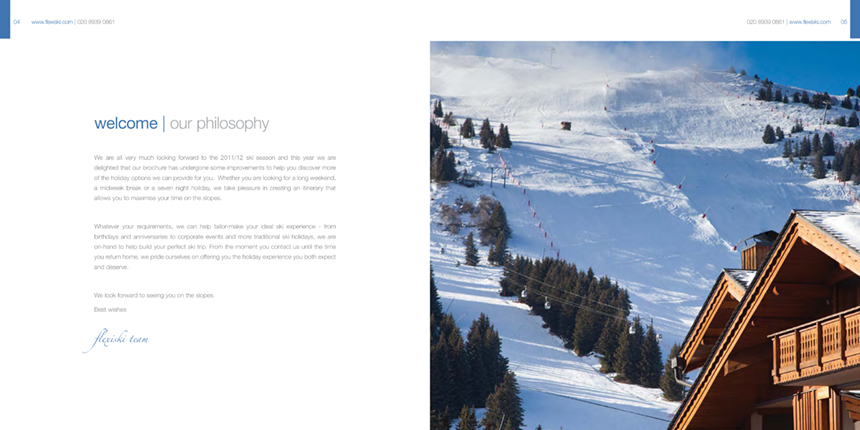
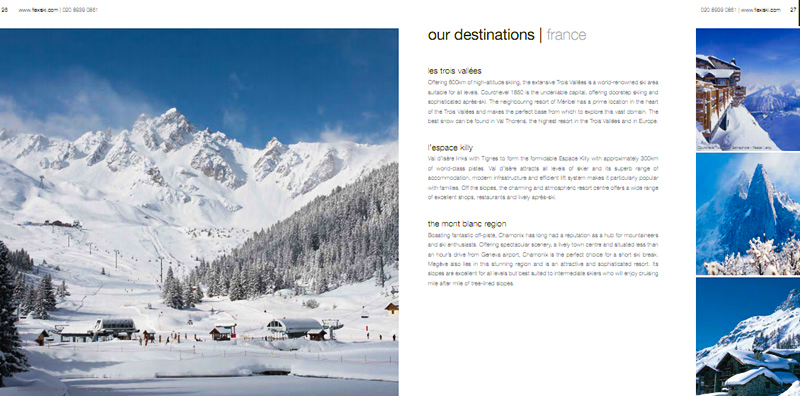
Autumn always brings new ski brochures. As a photographer it is always nice to see how images you have taken for a brochure are used. Below are a few pages from the new Flexiski brochure 2011-12…

flexi03

Flexiski-11-12-brochure-(2)-11

Flexiski-11-12-brochure-(2)-2

flexi04

For more information on brochure/web photography and video get in touch here